
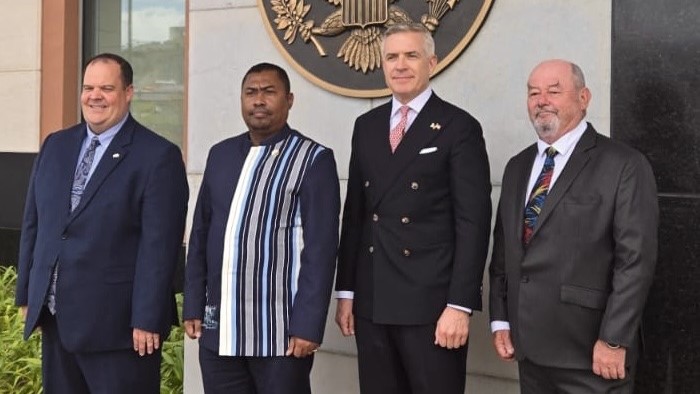

Harena Rare Earths (HREE) is now moving ahead with environmental work at the Ampasindava rare earths project, following the formalisation of its exploitation permit by the government of Madagascar.
The formalisation of the permit makes Harena one of only a handful of US-government backed permitted ionic clay rare earth projects in the world.
Ionic clay projects are far easier to produce rare earths from than the other standard form of rare earths projects – hard rock.
What’s more, Harena’s project is on the coast, meaning that it will be very easy to ship directly into US markets with a minimum of fuss.
This major milestone in the advancement of the project provides Harena with the regulatory framework required to move forward with the environmental and social impact assessment and the associated public consultations, in accordance with Madagascar’s Mise en Compatibilité des Investissements avec l’Environnement (MECIE).
The plan will then be to move to the development of the Phase 1 extraction plant and processing facility. The pilot phase is expected to be supported by Harena’s US$4.84 million project development funding agreement with the U.S. International Development Finance Corporation (DFC).
It will include the development and operation of a demonstration plant and an initial commercial operation, designed to validate the project’s technical, operational, economic, environmental and social parameters.
The results of this phase of work will support the completion of the definitive feasibility study for the full-scale development of the Ampasindava project.
“The formalisation of the exploitation permit represents a major milestone for Harena and the Ampasindava project, building on the Mining Terms and Conditions already agreed with the Government of Madagascar and allowing us to advance the project towards its next stage of development, supported by the significant funding we have secured from the DFC,” said Ivan Murphy, executive chairman of Harena.
“Our immediate focus is now on completing the environmental permitting process required to move into the pilot programme. The pilot programme will generate important technical data to further refine Ampasindava’s development pathway as we work towards bringing the Project into production in 2028.”
View from Vox
It’s great to see Harena making such progress. And the positioning now could hardly be better. The company is backed by the US-government’s funding arm, the DFC, partly because of the nature of the ionic clay mineralisation at Ampasindava. Other ionic clay projects, notably Serra Verde and Meteorite in Brazil have been acquired on massive valuations this year, and attracted interest from US mega miners precisely because they are ionic clay projects. The read across is only too clear. Projects like Ampasindava are at a premium. And, now that the exploitation permit has been formalised any remaining barriers to realising the full upside are dropping away fast.