

Panther Metals (PALM) has extended its agreement over the Obonga project in Ontario, Canada, after preliminary findings from drilling at the Wishbone VMS prospect strengthened its confidence in the scale and potential of the system.
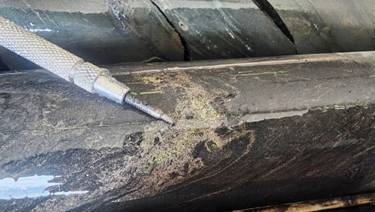
Portable XRF readings from three holes drilled during the Phase 1 diamond drilling programme have confirmed visually identified chalcopyrite mineralisation containing up to 8.34% copper. The copper occurs within a wider intersection of pyrrhotite-dominated massive and semi-massive sulphide mineralisation.
The result adds to previously reported zinc mineralisation at Wishbone, where drilling has returned grades of up to 11.65% Zn, and provides further support for the significant copper anomalies identified in historic lake-sediment and stream samples around the prospect.
Panther said the presence of copper at this tenor is particularly significant as it is the first such mineralisation identified in Obonga drilling. The company believes it could provide a geological explanation for the extensive copper anomalies surrounding Wishbone.
The Phase 1 drilling and access-trail construction were temporarily affected by Canadian government wildfire restrictions during the summer, with trail building resuming in the second half of August. Drilling has subsequently paused for the autumn hunting season in line with the exploration permit conditions and is expected to resume this winter.
Laboratory assays from the summer drilling are awaited, while step-out drilling is planned to continue into 2027.
Panther has also agreed a further extension to its 2021 sale and purchase agreement with Broken Rock Resources, extending the expiry date from 30 April 2027 to 31 August 2027.
The extension is intended to facilitate renewal of drilling permits and allow future infill drilling at Wishbone based on the anticipated Phase 1 results. It also takes into account drilling at the Awkward Conduit Target.
Panther Chief Executive Officer Darren Hazelwood said: "The latest work at Wishbone continues to strengthen our confidence in the scale and potential of this VMS system. The pXRF reading of 8.34% copper is particularly exciting because, alongside the high-grade zinc already identified at Wishbone, we are now seeing clear evidence of significant base-metal grade within the system.
This copper mineralisation also provides a compelling geological explanation for the very significant copper anomalies identified in the historic lake-sediment geochemistry surrounding Wishbone. We have known those anomalies were there; we are now beginning to see the mineralised system capable of producing them.
We now look forward to receiving the laboratory assays from the programme and getting back to drilling. Wishbone is a big system, and our job now is to determine just how big and how well mineralised it is.”
View from Vox
The 8.34% copper pXRF reading is an encouraging addition to the high-grade zinc already identified at Wishbone. The decision to extend the Obonga agreement suggests Panther sees sufficient potential in the drilling results to preserve its ability to undertake follow-up work, with the next key catalyst likely to be the assay results and subsequent drilling in 2027.