
Below are the key headlines from today’s updated papers, featuring the Financial Times, The Times, The Telegraph, The Daily Mail & more - see the full Press section here.
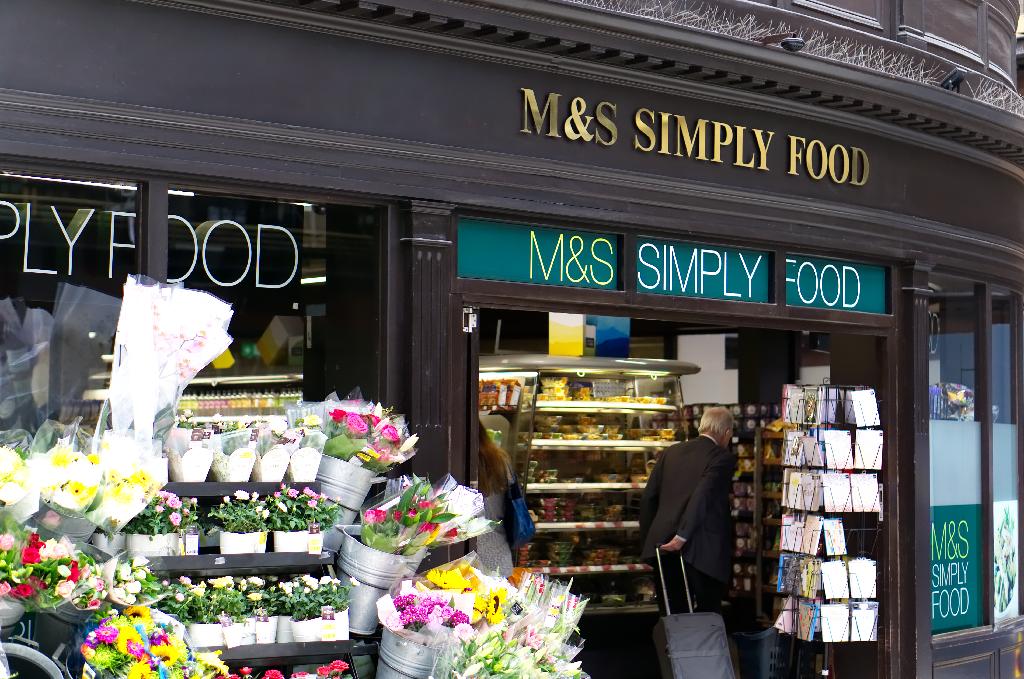
Marks & Spencer poised to seal Ocado deal to create £1.8 billion joint venture. Marks & Spencer Group (MKS) and online retailer Ocado Group (OCDO) on Tuesday confirmed plans for a ground-breaking joint venture first revealed by the Evening Standard. M&S will pay Ocado between £800 million and £900 million for a 50% stake in the new concern, giving it a food delivery service for the first time, according to sources close to the deal. The two firms – which have been in frantic talks for the past month over the tie-up – admitted the talks following the Standard’s story. Shares in Ocado spiked 10%, or 92p, tp 978p, with Marks & Spencer up 3% to 303p following the news. The two firms have been in frantic talks for the past month over the tie-up.
Persimmon pledges to improve quality as profits hit £1.1bn. Persimmon’s new chief executive will be one of the lowest paid bosses in the FTSE 100 this year as part of reforms announced by the housebuilder to tackle allegations of poor standards and controversy over its bonus scheme. The news comes as the company became the first UK housebuilder to report an annual profit of more than £1 billion. It sold 16,449 homes last year, a 3% increase on 2017. Its average selling price increased by 1% to £215,563. Revenues rose 4% to £3.7 billion. Dave Jenkinson, the interim chief executive, has been appointed the permanent head of the business. The previous chief executive, Jeff Fairburn, was sacked last year following a backlash over his £75 million bonus. Mr Jenkinson was in line for a £40 million bonus under the same flawed pay structure, which was set up in 2012 without a cap. In his new job he will be paid £515,000 and has agreed not to receive a bonus. He also will not receive an award under the group’s 2017 share performance plan. Persimmon (PSN) said that it expected to implement a new pay package for the chief executive next January after consulting with major shareholders in the autumn.
Babcock dives after a £10m Brexit restructuring hit. Babcock International Group (BAB) shares fell on Tuesday after revealing a £10 million-plus Brexit hit from restructuring its continental air-rescue business. The under-fire defence contractor, hit by aggressive short-seller Boatman Capital last year, will take the one-off tax charge in 2019 after setting up separate subsidiaries across Europe to carry on aerial firefighting and search-and-rescue missions. Costs to maintain the set-up are also likely to be £10 million from 2020. Chief executive Archie Bethel said the restructure was necessary to remain compliant with aviation regulations “post-Brexit, even in a no-deal scenario”.
We’re keeping the banks sweet to expand, says boss of Hotel Chocolat Group (HOTC). The boss of Hotel Chocolat on Tuesday said that he is prepared to ask its banks to advance extra cash to turbocharge the posh chocolatier’s expansion. Chief executive Angus Thirlwell, who is growing the business in America and Japan, said: “Cash generation is very strong, but if we need to find other ways to go faster, we will. “If it’s right to take on bank debt, we’ve got multiple sources to go to for that.” Revenue increased 13% to £80.7 million and underlying profits grew 10% to £17.3 million for the second half to December 30. Sales have been boosted by sales of its new hot chocolate machine — the Velvetiser, which costs £99.99.
Derwent London raises dividend as boss praises office market. The outgoing property veteran boss of Derwent London (DLN) on Tuesday shrugged off Brexit and praised the capital’s bullish office market as the firm hiked its 2018 dividend. The FTSE 250 firm, which John Burns has led since the 1980s, secured £26.8 million of new lettings last year. Burns, who steps down in May to become non-executive chairman, said the office market “is still pretty solid” despite political uncertainty. He pointed to the 240,000 square feet Brunel Building in Paddington, which Derwent London will have completed construction on later this year. Deals for 77% of the space have been signed and the rest of the property is under offer. Burns said a number of would-be tenants are “disappointed” to have missed out
Amur has one of the largest undeveloped nickel sulphide projects in the world. It has revealed details of a pre-feasibility study for its Kun-Manie nickel project in Russia’s Far East. The study outlines two production scenarios capable of processing six million tonnes of ore per annum. The first option is the toll smelt option which provides the swiftest path to revenue generation. In this scenario, it’s envisaged that concentrate will be sold to a purchaser. The second option is for Amur Minerals Corporation NPV (AMC) to construct and operate an electric furnace/flash smelter that will convert concentrate to low grade matte. This option allows for the capture of additional revenues from the by-product metals of copper, cobalt, platinum and palladium.
Shares in Travis Perkins (TPK) climbed more than 10% today after the builders’ merchant saw operating profit improve in the second half. The company, which owns DIY chain Wickes, said that after a difficult first half, adjusted operating profits jumped 10.7% in the second half as its cost-cutting measures began to pay off. Sales rose 4.8% to £6.74billion in 2018, while adjusted pre-tax profits for the year rose 1.2% to £347million. It comes as Travis is looking to shifts its focus to trade customers from DIY. In December it announced it was putting its plumbing and heating division up for sale and cost cuttings worth between £20million to £30million.
The competition watchdog is posied to investigate the £1.3bn hostile takeover of Provident Financial (PFG) by its ex-boss. The Competition and Markets Authority (CMA) said it had served the two sides a so-called initial enforcement order that means the companies must stay separate while it decides if it should probe further. The firms can keep talking and agree terms in the meantime. John van Kuffeler, who was chief executive and then chairman of Provident for over two decades, made an unsolicited bid for the troubled doorstep lender last week through his firm Non-Standard Finance (NSF). Provident has hit back, saying the bid offers little value and should be rejected.
Standard Chartered to slash costs by $700m. Standard Chartered (STAN) has pledged to improve its returns dramatically in the next three years by slashing costs by $700 million and focusing on underperforming countries. The emerging markets bank will focus on India, Korea, the United Arab Emirates and Indonesia and several other countries as it attempts to remove a “drag” on its revenues and profits. Standard Chartered also set out a new target to achieve a return on tangible equity of at least 10% by 2021, up from 5.1% last year, driven by targeted income growth of between 5% and 7%.
Germany’s ban on arms exports to Saudi Arabia in the wake of the killing of journalist Jamal Khashoggi could blow a £33m hole in Meggitt’s sales. The aerospace and defence parts supplier provides £700,000 worth of kit to each Typhoon fighter jet and Saudi Arabia has agreed a £10bn deal to buy 48 of them from BAE Systems. However Meggitt (MGGT) could be affected by the fallout from Germany’s decision to halt arms sales to the Gulf nation, as Typhoons are built by a four-nation consortium of which Germany is part.
Drax Group (DRX) now produces three quarters of its electricity from biomass as the electricity producer announced higher annual profits in a year that saw it buy generating assets from Scottish Power. The FTSE 250 firm said it was now one of the UK’s leading generators of low carbon and renewable electricity, with four of its six units converted to burn compressed wood pellets from sustainably managed forests in the US rather than coal. While Drax expects the UK’s power system to become increasingly dominated by wind and solar power, it said alternative supplies would still be needed when those forms were not available.