
Below are the key morning headlines from today’s papers, featuring the Financial Times, The Times, The Telegraph, The Daily Mail & more - see the full Press section here.
Interserve says it’s on track amid fears of another Carillion. Interserve (IRV) , one of the biggest outsourcing companies serving the government, scrambled to calm market jitters yesterday, rebuffing claims that it was teetering on the brink and could follow Carillion into receivership unless it could raise fresh capital. Shares in the group slumped by as much as 26% to less than 29p, before retracing almost all of the losses and ending the day at 38.5p, down 2%, when a positive statement was rushed out mid-afternoon. This said that the implementation of strategy “remains on track” and the group continued to expect a significant operating profit improvement this year “in line with management’s expectations”. The latest flurry of investor nerves began last week after a joint venture partner, Renewi, disclosed that Interserve had missed a deadline on an important energy-from-waste project in Derby. They intensified yesterday when the BBC reported that it was planning to tap investors for more cash, citing sources close to the company.
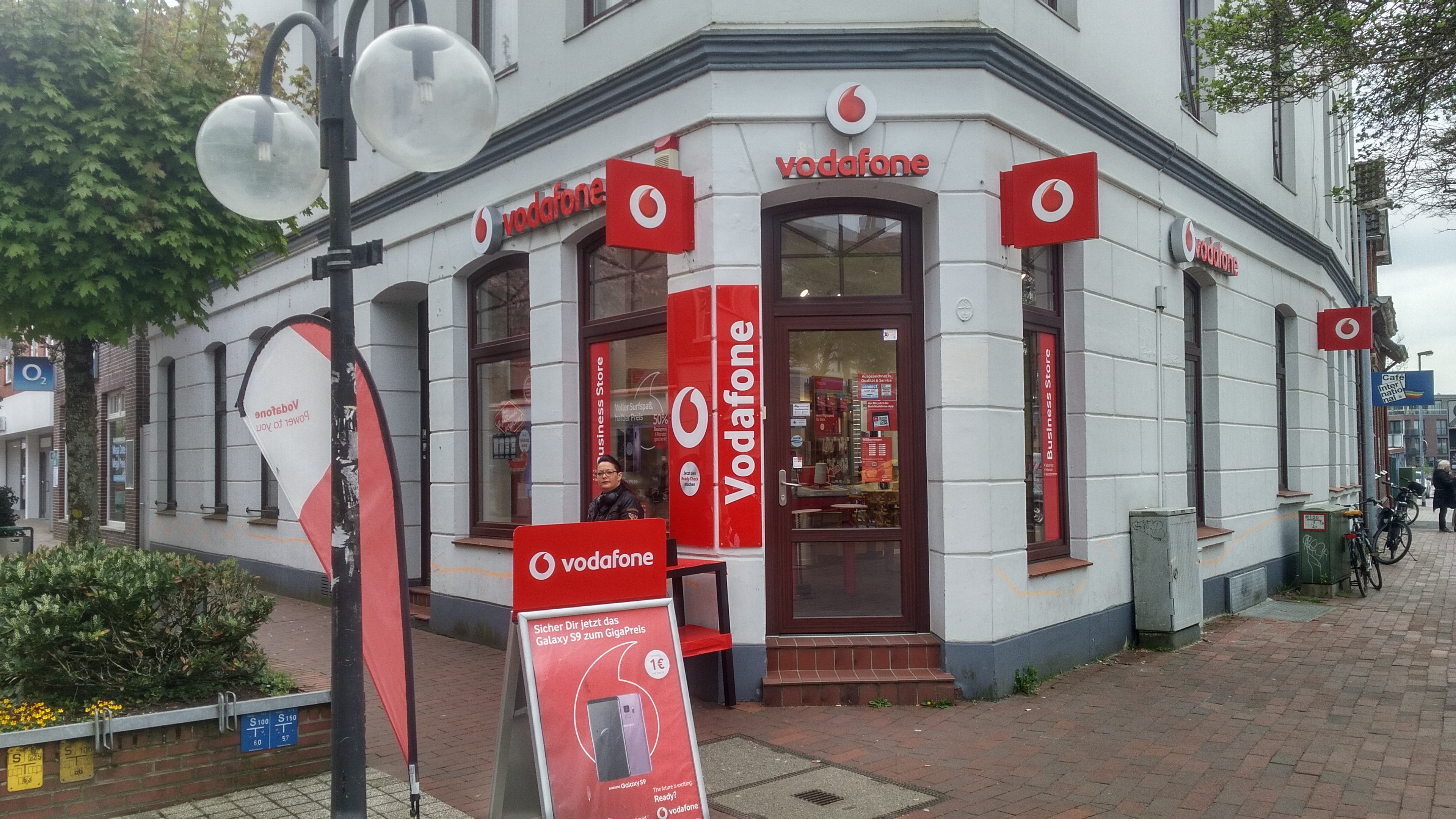
Vodafone will cut costs and boost growth, says new boss. The new chief executive of Vodafone Group (VOD) has launched a review of its masts business and is targeting €1.2 billion of cost savings as part of his strategy to revive the telecoms company. Unveiling his plans for Vodafone alongside its half-year results yesterday, Nick Read said he will focus on generating higher returns from its infrastructure assets, step up its digital transformation and “radically” simplify its operating model. Mr Read, Vodafone’s former chief financial officer, also moved to reassure investors by holding the dividend steady, triggering an 7.8% rebound in its share price to 155½p.
South Western Rail is facing its own Waterloo, warns First Group. The new chief executive of FirstGroup (FGP) has opened talks with the transport secretary to amend the company’s £2.6 billion winning bid to run the trains running out of London Waterloo. In an echo of the fiasco on the east coast mainline on which Chris Grayling renationalised the operation of trains on the route between London King’s Cross and Edinburgh after sacking Stagecoach-Virgin, Matthew Gregory said First Group needed to amend the terms of its agreement on SWR. Stagecoach-Virgin’s contract to run the east coast mainline was terminated when it admitted three years into its franchise that it could not keep up with the £3.3 billion payments due to the Treasury. First Group has promised to pay the Treasury £2.6 billion from SWR over seven years.
Farmers give thumbs down to Sainsbury’s merger with Asda. The National Farmers Union has warned that its members will feel the impact of any squeeze on suppliers that will result from the merger of Sainsbury (J) (SBRY) and Asda. The organisation, which represents more than 55,000 farmers in England and Wales, made the remarks in a submission to the Competition and Markets Authority, which is investigating the proposed merger of Britain’s second and third largest grocers. The NFU said that while it believed “healthy competition is good, severe market disruption is a concern of our members’ ability to survive”. An unnamed supplier cautioned: “The proposed merger only serves to deteriorate conditions in an already concentrated market, to the significant detriment of consumers and suppliers . . . this will have significant negative implications and raise material competition issues at all levels of the supply and distribution chain.”
Landsec set to build ‘if there’s a good Brexit’. One of Britain’s largest listed property companies is preparing £3 billion of developments to start after Brexit — but only in the event of a “good deal”. Land Securities Group (LAND) , which has been cautious on new developments since 2014 and halted speculative development after the referendum, said it planned to build more than 1,700 homes and develop £2 billion of primarily speculative office developments in London. The FTSE 100 developer, which owns Trinity Leeds and Gunwharf Quays in Portsmouth, reported a 1.4% fall in the value of its property portfolio to £14 billion in the six months to the end of September.
Foxtons is forced to close six branches. Foxtons Group (FOXT) , the estate agency, said it had responded to a challenging London market by closing six branches. The company said that, after reviewing its estate, it was closing its branches in Park Lane, Beckenham, Enfield, Loughton, Barnes and Ruislip, although it would continue to cover 85% of the capital from its remaining 61 sites and had “no current plans for further closures”. In what it insisted was “a solid third-quarter performance”, Foxtons reported flat revenues of £35.1 million, lifting total revenues in the first nine months to £88.1 million, a fall of 6%. Lettings revenue in the quarter grew by 2.7% to £23.1 million, while sales revenues fell by 3.9% to £9.9 million, which it described as “a solid performance amidst ongoing reduced transaction levels”.
Uncertainty puts brakes on growth in B&M’s sales. Britain’s “difficult and uncertain retail environment” has hit growth at B&M European Value Retail S.A. (DI) (BME) , the aggressively expanding discount chain. The discounter said that, while UK revenues were up 7.1%, its like-for-like sales, which track the performance of shops open more than one year, grew by 0.9%. Profits remained strong, however, rising by nearly 33% to £115 million in the six months to September 29 as the retailer kept a tight rein on costs and stock control. B&M said yesterday that it had experienced a slowdown in sales in July and August because it had sold much of its gardening and outdoor products in the unusually warm May and June months. It said that sales growth had since returned to normal in September.
Doubters are silenced by an upbeat Melrose. Melrose Industries (MRO) has partially reversed the 40% slump in its share price since its hostile takeover of GKN by telling investors that all is well in its aerospace and automotive businesses. With chatter in the City suggesting problems since the acquisition, the FTSE 100 industrial group said trading and cash generation were in line with expectations, and there were “outstanding opportunities” to improve GKN’s businesses for the benefits of Melrose investors. Shares in Melrose climbed 7%, or 12p, to 177p. In recent weeks the stock had fallen to a low of 149p, compared with 248p at the time of its cash-and-shares takeover of GKN in March.
Flybe puts itself up for sale. The Exeter-based budget airline Flybe Group (FLYB) is putting itself up for sale as it struggles with currency headwinds and fuel costs. It is planning to officially announce to the London Stock Exchange that it is exploring sale options as well as looking into a possible merger. The announcement will be made on Wednesday, as the company reports its interim results. Bankers at Evercore have been brought in to handle the talks about a potential deal, according to a Sky News report. Last month, Flybe shares plummeted after the company warned that projected losses would be more than three times greater than expected.
Argentina-focused oil company President Energy (PPC) climbed as it said test results from one of its new wells were way ahead of expectations. The firm said that ‘in due time’ the well would likely result in an increase in its proven oil reserves, boosting the company’s value. Exchange rates for the Argentinian peso were stable, the company added, and by the end of the year it is planning to be producing in excess of 3,000 barrels per day.