
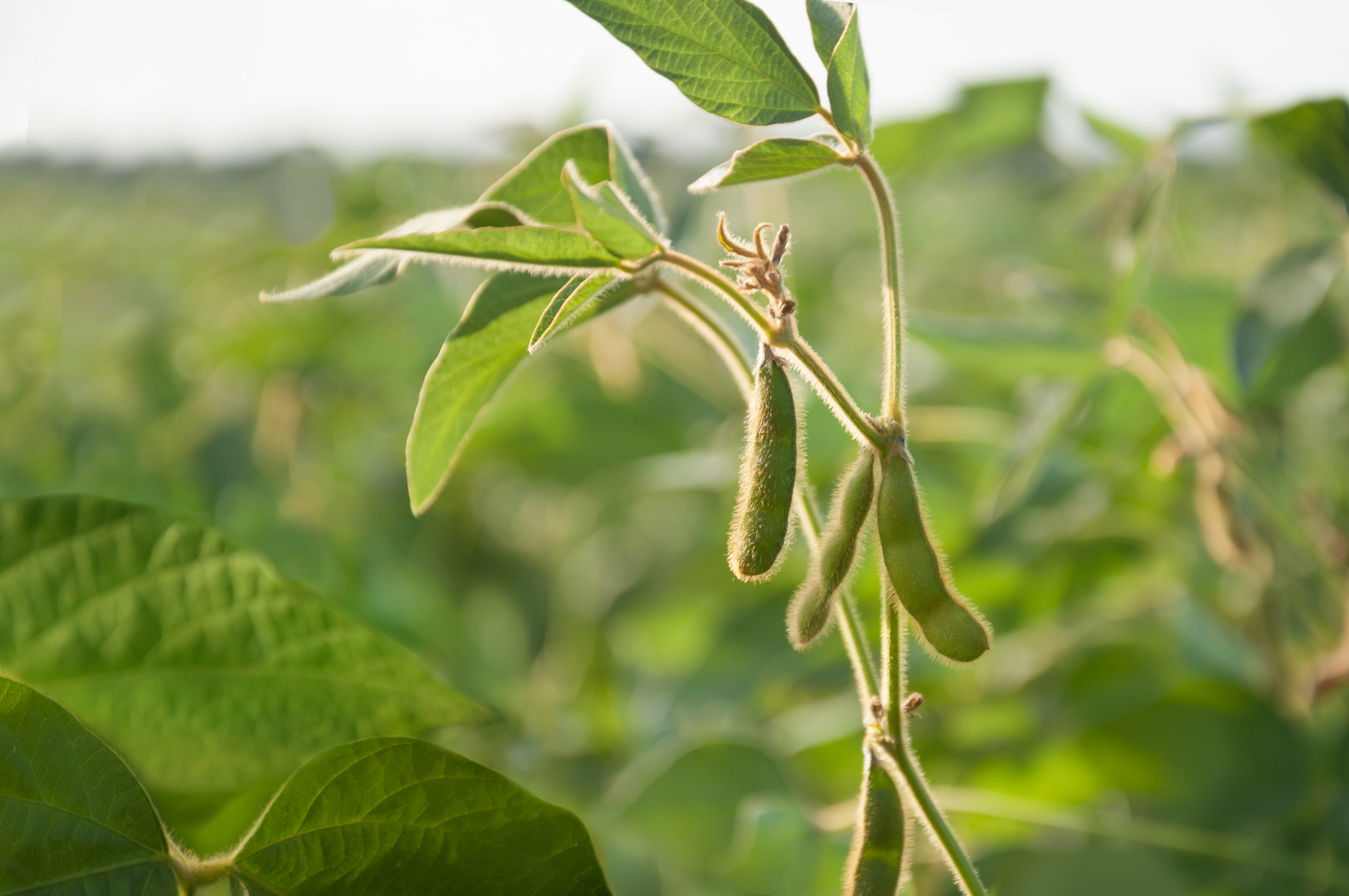
Plant Health Care (PHC ) has signed a five-year commercial agreement with the Brazilian agricultural production company, Nutrien Soluções Agrícolas (“Nutrien”), under which Plant Health Care will supply its Saori® soybean seed treatment for Nutrien to use on soybeans.
Saori®, known as PHC279, was developed by Plant Health Care as a seed treatment for soybeans in Brazil, one of the world’s leading soybean producers. The response to the treatment, which was launched by Nutrien in September 2021, has been positive to date.
In fact, Plant Health Care said Saori®’s performance is progressing ahead of expectations in Brazil and that revenue from sales of the seed treatment to Nutrien is expected to exceed US$0.750 million in the first half of 2022, and to grow to more than US$5 million by 2025.
Nutrien said it expects to treat around 150,000 hectares of soybeans in 2022, expanding this to more than one million hectares by 2025 and that the opportunity for this kind of treatment is considered “very large” in Brazil, which already has 40 million hectares of soybeans planted.Brazilian soybean farmers spent US$2.85 billion on disease control in the 2019/20 season, and the addressable market for Saori in Brazil in 2022 is estimated at 40 million hectares.
Initial reports have indicated that Saori-treated fields become healthier and more robust, with lower incidence of disease compared to untreated fields. Ongoing field trials in Brazil with more than 200 soybean farmers in the 2021/22 season confirmed the benefits of Saori; in Plant Health Care’s own trials, the average yield increase was found to be almost 10%.
Saori™ is the Company’s first product from its PREtec peptide technology platform to be commercialised. Derived from natural proteins, PREtec is an environmentally friendly approach to protecting crops and is compatible with mainstream agricultural practices.
Saori™ is based on PHC279, a novel technology that makes soy plants healthier, improves resistance to multiple diseases and increases yield. Plant Health Care said Saori™ offers a highly cost-effective tool to farmers to reduce spend on disease control and to increase yield.
Chris Richards, CEO of Plant Health Care commented: ‟We expect Saori-treated soybean seed to be planted on about 150,000 hectares next season, and many multiples of that amount over the next few years. Nutrien Ag Solutions is the very best partner for Saori, with multiple channels for making Saori available to Brazilian soybean growers.”
Plant Health Care plans to launch PHC279 in the US through its distributor when regulatory permits have been obtained during 2H22 with further product launches planned each year which the company says will further underpin its confidence in future growth projections.
“Offering biological products is an important step to increasing the sustainability of Nutrien Ag Solution’s product portfolio. As a company, we’re looking for ways to make it easier for our customers to adopt sustainable practices on their lands, which is why we’ve invested a billion dollars into partnerships, research, and development into expanding our offerings of nature-based products,” said Jeff Tarsi, Interim President of Global Retail, Nutrien Ag Solutions. “We’re excited that we can partner with companies like Plant Health Care to bring more biological options for growers looking for alternatives to traditional synthetic products.”
View from Vox
Plant Health Care’s mission is to tap into the global market for biological products, a market which is growing at 12% per annum and is projected to be a $19 billion market by 2026.
Since 2018, the company has evolved its strategy from a focus on licensing its technology to major suppliers of agrochemicals, towards working with distributors. It is convinced that the company’s distributor partners will drive the adoption of its technologies over the coming years, to the benefit of the farming industry as it seeks to adopt more sustainable practices.
Plant Health Care said the market for sustainable agriculture is growing at more than 12% per annum - and that the business is aiming to grow faster than that market in 2022 and beyond.
In recent weeks, Chairman of the Group, Richard Webb, told investors that Plant Health Care delivered strong results for the year ended 31 December 2021, ahead of market expectations.
The Commercial business was EBITDA and cash positive for the second straight year with on-ground sales strong in Brazil and the US which increased 48% and 85%, respectively.
As at 31 December 2021 and 2020, investments and cash and cash equivalents were $9.2 million and $4.1 million respectively, with cash remaining a primary focus for the business. In March 2021, the company received improved funding following its fundraise of $9.1m.
Notably, today's $0.75m estimated revenue for 1H22 is around 21% of total 1H22 revenue and therefore material to the company's FY22 results.
As a result, the Company was able to increase its investment in PREtec product launches in 2021, raising the rate of cash burn to $4.1m. At the end of 2021, its cash reserves were $9.2m. The Company said it is confident that it will reach profit within these cash reserves.
Dr Christopher Richards, Chief Executive Officer of Plant Health Care, said the Company’s encouraging performance in 2021 demonstrated the strength of its competitive position.
As it rolls out PREtec products, the company anticipates that sales growth in 2022 and beyond will be “even faster than in 2021.” It said strengthening its position in Europe, the world’s largest market for sustainable agriculture, is an important element in its strategy.
The Company’s previous agreement will see it distribute the Harpin αβ bio-stimulant product, ProAct®, into Argentina and Uruguay, respectively, to further drive its commercial sales.
Ager Agro SAS (“Ager”), which supplied products to 10 million total treated hectares of crops in Argentina in 2021, was recently appointed as the group’s distributor across both markets.
Over 16 million hectares of soybeans were planted in Argentina in 2021. Furthermore, farmers are under increasing pressure to move to more environmentally and biologically friendly products to improve the sustainability of production, the company acknowledges.
Follow News & Updates from Plant Health Care: