

Pinnacle Silver and Gold (PINN ) has returned more positive results from the second round of scoping metallurgical tests at the high-grade El Potrero gold-silver project in Durango, Mexico.
This second round of tests was broader in scope than the first, encompassing all three historic mines on the Dos de Mayo vein, rather than just Pinos Cuates, as well as the Estrella and Capulin veins.
Bottle roll leach tests for the Dos de Mayo vein continued to return consistently high gold recoveries, averaging 97.8%, while gold recoveries of 97.6% and 97.4% were obtained for the Estrella and Capulin veins, respectively.
Silver continues to be more variable due to a more complex mineralogy.
However, silver recoveries increased to an average of 70.02% for Dos de Mayo, 64.7% for La Estrella and 80.5% for El Capulin.
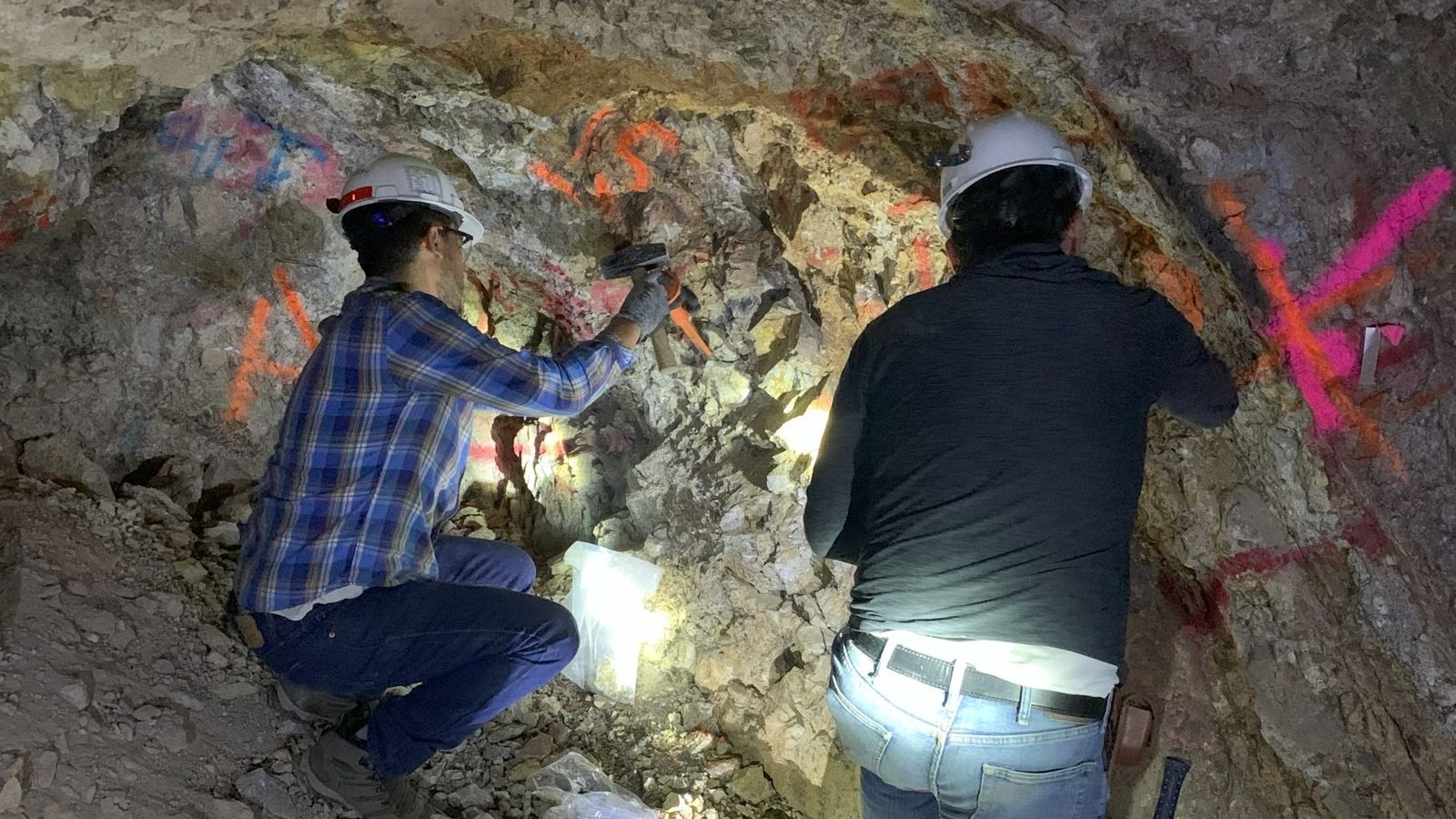
Seven mineralized samples were sent to the SGS Lab in Durango, Mexico for a second round of metallurgical testing, including five samples from the three historic mines on the Dos de Mayo vein, one from the Estrella vein and one from the Capulin vein.
Head assays from the seven samples averaged 7.7 grams per tonne gold and 116 grams silver, implying a robust grade for future mill feed.
Seven corresponding sub-samples were sent to the SGS lab in Santiago, Chile for TIMA-X mineralogical analyses. Gold in the form of electrum, a natural gold-silver alloy, was detected in all seven samples.
In addition to the electrum, silver was also detected in all seven samples.
The five samples from the Dos de Mayo vein were composited for grinding tests, gravity separation, and bottle roll leaching. However, the gravity tests did not improve the overall recoveries of gold and silver.
The five-sample composite from the bottle roll cyanide leach tests, without prior gravity separation, ground to 53 microns, resulted in a gold recovery of 97.83%, and a silver recovery of 70.02%.
The same composite, ground to only 75 microns, resulted in gold and silver recoveries of 96.79% and 66.38%, respectively.
Average unoptimized reagent consumption was within expected ranges for a preliminary test.
“We are extremely pleased with the metallurgical results from this second round of tests, showing robust head grades, improved recoveries for both gold and silver, and consistently high gold recoveries across all three veins,” said Robert Archer, Pinnacle’s chief executive.
“Although broader in scope than the Phase I round, these tests were still run using simple baseline parameters with very little optimization, leaving room for even further improvement. The mineralogical tests have identified the dominant minerals present and demonstrate consistent grain sizes for both gold and silver. With that information, we were able to conduct tests using a finer grind and achieve a slight increase in both gold and silver recoveries. While the gold recoveries were consistently high between the three veins sampled, silver was more variable and additional testing will determine whether the veins will be blended at the plant or batch processed to maximize the silver recovery. Furthermore, the lack of improvement in recoveries through the addition of a gravity circuit means that we will not have to incur the cost of adding this to the plant. Overall, these results are providing valuable information as we streamline the flow sheet prior to rebuilding the plant.”
View from Vox
This is good progress from Pinnacle, as it continues to build up its knowledge base around El Potrero. The ore looks like it will yield significant gold and silver grades, although there may be more work to do on optimising the silver extraction. In the meantime, the bigger question is: how much ore does Pinnacle have at El Potrero? We’ll get part way towards the answer to that when the results from the ongoing underground drill programme start to come in over the coming months. At this point we know the ground is highly prospective, and there’s plenty of mineralisation around. We know too that the mineralisation can be separated effectively from the rock that binds it. More detail is coming, but in the meantime, with all this progress going on, it’s not surprising that the shares have risen by 120% over the past 12 months.