
Below are the key morning headlines from today’s papers, featuring the Financial Times, The Times, The Telegraph, The Daily Mail & more - see the full Press section here.
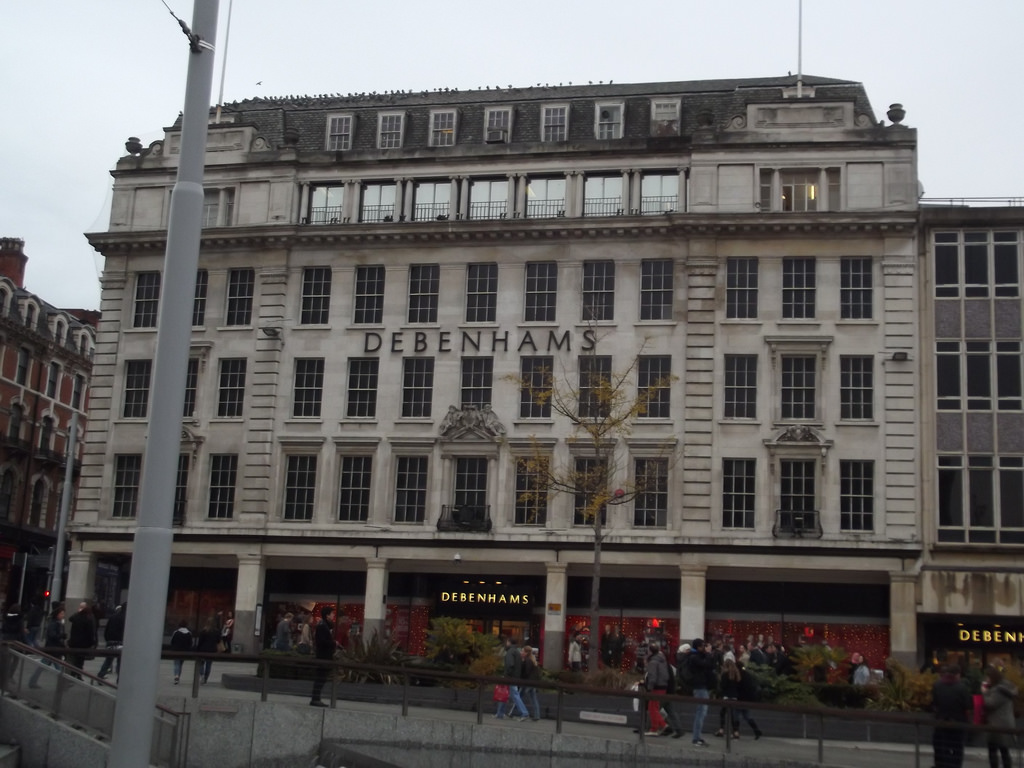
The boss of Debenhams (DEB) has insisted plans to shut dozens of shops and slash spending at the embattled department store chain will not undermine his attempts to get more shoppers through the doors. Debenhams unveiled an annual loss of more than £500m on Thursday alongside plans to close 50 of its 165 shops in a move that will put around 4,000 jobs at risk. It will also slash capital spending by almost half to £70m per year as well as cutting out £50m of annual day-to-day costs. Sergio Bucher, chief executive, said the drastic moves were a reaction to a faster-than-expected shift of consumer spending online and higher business rates that made some of the shops less financially viable.
Profit warning knocks £2bn off WPP as group battles to adapt. The boss of WPP (WPP) has admitted that the company had been “slow” to adapt to changes in the marketing industry after a profit warning wiped nearly £2 billion off the value of the advertising group. Mark Read, named as successor to Sir Martin Sorrell last month, warned that WPP would have to take “decisive action” to return to growth. In a veiled attack on his predecessor, he said WPP needed to invest in creative output in North America, which had “clearly not been strong for several years”.
The chairman of BT Group (BT.A) has rejected suggestions that the appointment of Worldpay boss Philip Jansen as chief executive could lead to a sale of the broadband network unit Openreach. Jan du Plessis told The Telegraph that after a year at BT he had reached the firm conclusion that 100% ownership of Openreach is best “for BT, for Openreach and for our stakeholders”. “I fully endorse the well-established position of BT in relation to Openreach,” he said. “Personally I think the Openreach structure works.”
A multimillionaire Midlands engineering boss with a penchant for racing an old Ford Capri has cashed in a £52 million portion of his empire in a deal with a leading supplier to the construction industry. Polypipe Group (PLP) is to acquire Manthorpe Building Products, which is part of the Derbyshire-based group headed by Paul Pochciol. Selling the building products firm, which last year made £6.3 million of operating profits on £16.4 million of revenues, leaves the Pochciol family with its original engineering business in Ripley supplying components to Rolls -Royce in Derby. Mr Pochciol founded the family-owned group in the 1980s.
Private jet operator Air Partner (AIR) , which counts celebrities, sport stars and royal families among its regular customers, has raised its dividend despite its auditor repeating a warning over the historical “concealment” of a multimillion-pound accounting black hole. Air Partner was plunged into crisis in April, suspending its shares after it unearthed a £4m hole in its books. Its results for the six months to July 31 revealed that the accounting scandal cost the London-listed company £750,000 in fees to forensic accountants from PwC.
Sainsbury’s has struck a deal to sell clothes by Oasis, the Icelandic-owned fashion retailer, in five supermarkets. Sainsbury (J) (SBRY) said two Oasis concessions would be open in time for Christmas at its stores in Sydenham, south London, and Selly Oak, near Birmingham. A further three will open next year. It is the first time that Oasis has sold its ranges in a supermarket setting. Sainsbury’s said the first two locations had been carefully selected as they were branches where the grocer’s own Tu clothing range performed well.
Halfords Group (HFD) is understood to have pulled out of plans to buy Evans Cycles, leaving the way clear for Mike Ashley’s Sports Direct International (SPD) to buy the chain. Halfords decision casts doubt over the future of Evans, above, which needs to raise millions of pounds in funding to secure its future. Sports Direct is regarded by industry insiders as the new frontrunner to acquire it, although they cautioned yesterday that it was unclear whether a deal would be agreed
Moody’s could downgrade discount chain B&M European Value Retail S.A. (DI) (BME) following its foray into France. The credit rating agency said B&M’s purchase of French retailer Babou was a major risk because it was heavily funded by debt. Victor Garcia, lead analyst at Moody’s, added: ‘This, coupled with the lack of experience of B&M in France and the difficulties that the company experienced with Jawoll in Germany, mean that the execution risk is high.’
Furniture company SCS Group (SCS) is pulling its 27 concessions from House of Fraser stores after the Sports Direct International (SPD) tycoon Mike Ashley bought the department store for £90 million. The retailer, which sells sofas, carpets and other furniture, said customer orders through its House of Fraser concessions declined by 52.5% in the 12 weeks to October 20. House of Fraser concessions were just 2.7% of ScS’s orders in that time. David Knight, chief executive of ScS, said: ‘It has become clear that the partnership was no longer beneficial to ScS.’ ScS said it will try to redeploy affected staff.
Rising competition caused insurer Hastings Group Holdings (HSTG) to take a dive, as it suffered its worst-ever day on the stock market. Almost £200 million was wiped off the FTSE 250 firm’s value, as shares fell 13.7%, or 30.1p, to 190.3p. In a trading update, the home and motor insurance specialist blamed its disappointing figures on higher competition.
Retirement savings firm Just Group (JUST) shot up by 12.2%, or 9.1p, to 83.4p. Investors piled in after the Bank of England’s Prudential Regulation Authority (PRA), which supervises risk controls, pushed back mortgage changes. The proposals for so-called equity release mortgages, where over-55s can redeem part of the value of their home in cash, will impose stricter rules on how insurers calculate the future value of homes. This would generally mean they have to hold more money to cover any potential future risks. But after being criticised for rushing in the changes, and not giving firms enough time to react, the PRA said it would delay any new rules for at least a year.