
SP Angel – Morning View – Wednesday 14 11 18
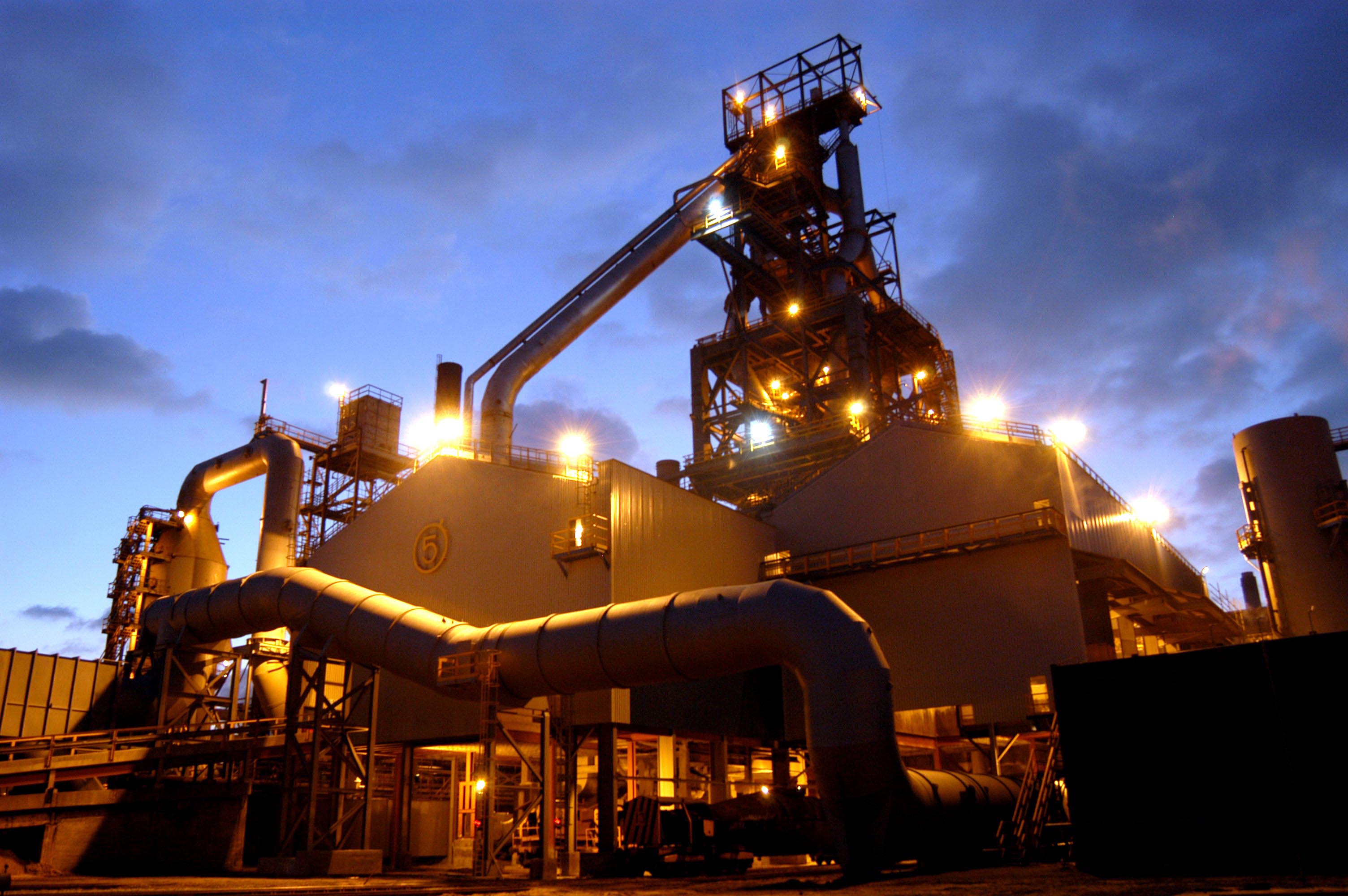
China steel surges ahead of winter smog curbs
MiFID II exempt information – see disclaimer below
African Battery Metals* (ABM LN) – update on exploration activities
Arc Minerals* (ARCM LN) – Drilling intersects higher copper and cobalt grades
Bushveld Minerals* (BMN LN) – Energy storage and vanadium redox flow batteries 101 webinar
Solgold* (SOLG LN – Quarterly operational and financial update
|
Dow Jones Industrials |
-0.40% |
at |
25,286 | |
|
Nikkei 225 |
+0.16% |
at |
21,846 | |
|
HK Hang Seng |
-0.64% |
at |
25,627 | |
|
Shanghai Composite |
-0.85% |
at |
2,632 | |
|
FTSE 350 Mining |
-1.45% |
at |
16,631 | |
|
AIM Basic Resources |
+0.04% |
at |
2,185 |
Economics
Germany – The economy recorded the first quarterly contraction in more than three years reflecting weaker exports to China and a setback in auto production related to new emissions tests.
- “As regards domestic demand, there were mixed signals… while gross fixed capital formation both in machinery and equipment and in construction was higher than in the previous quarter, final consumption expenditure of households declined,” the federal statistics bureau said.
- German auto producers’ association data showed that September output dropped 24%yoy.
- Growth is expected to recover towards the end of the year reflecting a temporary nature of emissions related disruption, although, slowing global growth and trade tensions are likely to have more lasting effect.
- Q3 GDP (%qoq/yoy): -0.2/+1.1 v 0.5/2.0 in Q2 and -0.1/+1.3 forecast.
UK – The pound is off marginally this morning (1.2957) as May is expected to ask her Cabinet ministers to back her Brexit deal or quit.
- The cabinet meeting will begin today at 2pm followed by a parliamentary hearing to approve the Brexit deal.
- Risks of the deal being voted down in Parliament are material with the DUP already suggesting it may not support it.
- PM warned Eurosceptic ministers that it is the best deal that can be looked forward to which if not approved the government would have to start actively preparing for a potentially economically disruptive “no-deal” Brexit.
- The draft proposal includes a UK-wide customs backstop plan to avoid a hard border in Ireland, keeping Britain in a customs union with the EU until more permanent solution is agreed.
- Brussels agreed the proposal in a concession to London, but in exchange the EU would have a say over when Britain left such a UK-wide customs union, FT reports.
Italy – Bond yields surged to a three week high hitting 3.55% for 10y debt after the government told the EC it will stand by its fiscally agreesive budget plans.
- Yesterday, PM Giuseppe Conte wrote a letter to the commission that the nation have reiterated its budget deficit outlook for 2.4% and economic growth forecasts for 1.5% for next year.
- Spread over same maturity German debt widened to 315bp, the highest level since end of October.
- Italian equity index is down 1.35% this morning v Euro Stoxx 50 benchmark that is off 0.98%
Currencies
US$1.1284/eur vs 1.1236/eur yesterday Yen 113.88/$ vs 114.10/$ SAr 14.419/$ vs 14.404/$ $1.296/gbp vs $1.289/gbp 0.720/aud vs 0.721/aud CNY 6.951/$ vs 6.957/$
Commodity News
Precious metals:
Gold US$1,200/oz vs US$1,202/oz yesterday
Gold ETFs 68.6moz vs US$68.7moz yesterday
Platinum US$834/oz vs US$849/oz yesterday
Palladium US$1,107/oz vs US$1,111/oz yesterday
Silver US$13.97/oz vs US$14.09/oz yesterday
Base metals:
Copper US$ 6,040/t vs US$6,161/t yesterday
Aluminium US$ 1,934/t vs US$1,956/t yesterday
Nickel US$ 11,280/t vs US$11,495/t yesterday
Zinc US$ 2,472/t vs US$2,532/t yesterday
Lead US$ 1,932/t vs US$1,946/t yesterday
Tin US$ 19,275/t vs US$19,330/t yesterday
Energy:
Oil US$65.5/bbl vs US$69.4/bbl yesterday
Nigeria To Lift Crude Oil Production To 1.8 Million Bpd In 2019
- Nigeria will raise its crude oil production to 1.8m bpd in 2019 from around 1.6m bpd currently, according to the head of the Nigerian National Petroleum Corporation.
- The country also aims to increase its production of condensate to 500,000 bpd next year from 400,000 now, NNPC Group Managing Director Maikanti Baru said.
- The Nigerian state-controlled oil company also expects to sign this month agreements with various consortia to help it overhaul the old and inefficient oil refineries in the country.
Natural Gas US$4.096/mmbtu vs US$3.938/mmbtu yesterday
Uranium US$29.10/lb vs US$29.10/lb yesterday
Bulk:
Iron ore 62% Fe spot (cfr Tianjin) US$71.1/t vs US$72.2/t
Chinese steel rebar 25mm US$673.4/t vs US$679.1/t
- China’s steel output climbed to record highs in October as mills maximise runs ahead of winter curbs starting in November. Crude steel production climbed +9.1% from a year earlier to an all-time high of 82.55Mt, according to the statistics bureau.
- Chinese mills have been maximising runs due to an unusually long period of high prices and before government-led winter production that typically run between November and March, when coal-fueled power generation and heating pollutes air in the northern regions.
- The outlook for November is less certain. Some in the steel industry say that winter production cuts may be less severe than last year, while Barclays Plc has warned there’ll be a greater effect this year as the area subject to control expands.
- There’s also indications that steelmakers are making less money. The profitability of making hot rolled coil in China via basic oxygen furnaces has tumbled about 80 percent in the past month, according to a Bloomberg Intelligence index.
Thermal coal (1st year forward cif ARA) US$87.0/t vs US$89.7/t
Coking coal futures Dalian Exchange US$198.5/t vs US$198.5/t
Other:
Cobalt LME 3m US$55,000/t vs US$55,000/t
China NdPr Rare Earth Oxide US$45,462/t vs US$45,445/t
China Lithium carbonate 99% US$10,071/t vs US$10,067/t
Tungsten APT European US$275-295/mtu vs US$275-295/mtu
Battery News
Solid state batteries a decade away
- Research by BMO has forecast that it will be near on a decade until solid-state battery technology becomes advanced enough to permit mass market adoption.
- Citing ‘perfecting the chemistry’ and other ‘developmental risks’ as factors considered, the firms still believes that liquid electrolytes for solid materials are key to achieving a more widespread transition to EV use.
- At the current rate of progress, the firm predicts a market penetration of 12% by 2025.
30 minute EV charging
- ComfortDelGro has announced it will introduce a direct current EV charging station in Singapore that could provide a full battery charge in about 30 minutes, which will be operated in conjunction with Greenlots.
- According to the news release, the charging station will offer two types of chargers – the alternating current charger and the direct current fast charger, which will allow two EVs to charge simultaneously.
- Charging is priced at S$0.40/kWh for both types of charging.
Ultra-thin transparent silver films for solar cells
- A new fabrication process for transparent ultra-thin silver films has been developed by researchers at Ruhr-Universität Bochum and the University of Wuppertal.
- They demonstrated that a silver thin film can be applied to an electrode with the new precursor by atomic layer deposition and showed that the thin silver films manufactured using this method are pure and electrically conductive.
- "As far as process technology is concerned, the successful synthesis of the new precursor paves the way for the development of ultra-thin silver films," concludes Thomas Riedl. "It constitutes a first step towards the production of novel electrodes for highly efficient solar cells and lights."
New targets on renewable and energy efficiency
- The European Parliament has confirmed the provisional agreement reached with the Council in June on energy efficiency, renewables and governance of the Energy Union.
- By 2030, energy efficiency in the EU has to have improved by 32.5%, whereas the share of energy from renewables should be at least 32% of the EU’s gross final consumption.
- Both targets are to be reviewed by 2023 and can only be raised, not lowered.
- Member states must also ensure that citizens are entitled to generate renewable energy for their own consumption, to store it and to sell excess production.
Electric mining trucks
- Epiroc AB unveiled on Wednesday what it said is the largest battery-powered vehicle for use underground: a 42 ton-capacity truck that can haul blasted rock through narrow tunnels.
- The firm has stated the upfront cost of buying a battery-powered vehicle would be about twice that of a conventional one.
- In a bid to boost sales, Epiroc will lease batteries for its new range of vehicles separately, making the initial outlay only slightly higher than for an equivalent diesel machine.
Company News
African Battery Metals* (ABM LN) 2.2p, Mkt Cap £2.9m – update on exploration activities
- African Battery Metals (“ABM”) commenced exploration work on their Cameroon licences, acquired as part of the purchase of Cobalt Blue Holdings Ltd, which are close to and in part contingous with the Nkamouna cobalt-nickel-manganese project historically owned by Geovic Mining Corp.
- Geovic conducted an extensive exploration programme over several years, identifying seven plateaus in the region where cobalt and nickel mineralisation was recorded and have become analogous for ongoing ABM exploration. Focusing on Nkamouna and Mada plateaus, Geovic discovered cobalt and nickel mineralisation between 5-20m depth in the deeply weathered profile or laterite that overlays ultramafic intrusions which represent the source of the metal.
- Laterites are frequently sources of cobalt and nickel mineralisation in equatorial regions of the world, including SE Asia, Australia and Latin America as well as Africa. Over time, this laterite profile has been eroded away by the rivers with transect the area and is only preserved in a series of plateaus between the rivers.
- Nkamouna hosts one of the world’s largest undeveloped cobalt resources outside the DRC, with the final NI 43-101 compliant Mineral Resource declared totalling 323.2Mt @ 0.21% cobalt, 0.63% nickel and 1.36% manganese. Subsequent Technical Report work completed by SRK in June 2011 determined an Ore Reserve of 54.7Mt @ 0.25% cobalt, 0.69 nickel and 1.33% manganese.
- Utilising Geovic evidence, ABM exploration programme focused on topographic and geophysical data to identify mineralised targets. Aeromagnetic data provided rapid coincident anomalies associated with highly magnetic ultramafic rocks which signal the presence of a series of intrusions. Areas where topographic highs coincide with aeromagnetic highs also provide the strongest likelihood of preservation of cobalt-nickel mineralisation.
- On the ABM Cameroon Licences, it is evident that the northern end of Ngoila North (which is a continuation of the Messea cobalt-nickel block), and much of Ekok and Ntam East all have elevated areas which coincide with aeromagnetic anomalies. These areas will become the focus of ABM’s anticipated next stage of exploration.
- Given that mineralisation at Nkamouna is found from around 5m to 22m in depth, ABM will need to devise an exploration approach which involves either deep pitting or use of a man-portable auger. The company hosted a team of Sahara geologists in July 2018 to assess the work necessary for a systematic exploration programme focused on the targets identified by the topographic and aeromagnetic data.
- Disappointing results from ABM’s auger programme of two transects across the Kisinka licence in DRC follow changes in the Mining Code and administrative delays. Cobalt grades of 0.002% to 0.021% and copper of up to 0.058% appear unrepresentative of Roan rocks which host most of DRC’s cobalt, especially considering seven producing cobalt and copper mines within 30km of the licence.
- The results do not invalidate Kisinka as an exploration target, but further work will be assessed in the context of the opportunities ABM management sees in its projects in Ivory Coast and Cameroon.
Conclusion: Analogous geophysical and topographic anomalies are positive for the discovery of consistent cobalt-nickel-manganese mineralisation within the vicinity of one of the world’s largest undeveloped cobalt resource, Nkamouna. The work gives clarity for the subsequent auger exploration programme and we look forward to the first results.
*SP Angel act as broker to African Battery Metals
Arc Minerals* (ARCM LN) 3.2p, Mkt Cap £20m – Drilling intersects higher copper and cobalt grades
ARC Minerals owns Casa Gold 99.4% of Casa Minerals and holds an effective 73% stake in Casa Mining’s Akayanga project
(ARC Minerals currently owns 66% of Zamsort which holds 100% of the Kalaba copper/cobalt mine and associated mineral licenses)
STRONG BUY
- Arc Minerals report significantly higher copper and cobalt grades in three recent Reverse Circulation ‘RC’ drill holes.
- The three short 25m drill holes show copper grades of up to 1.5% and cobalt grades up to 0.35% and averaging >0.2% over mineable widths.
- This near-surface saprolite hosted mineralisation can be mined without the need for drilling and blasting reducing the cost and time to access this material and effectively expanding the extend of potentially economic mineralisation.
- Drilling intercept highlights include:
- KGC003: 23m at 1.16% Cu Eq. from 2m
- including from 13m; 10m at 0.81% Cu and 0.15% Co for 2.00% Cu Eq.
- including from 17m; 4m @ 1.17% Cu and 0.22% Co for 2.90 Cu Eq.
- KGC005: 16m at 1.28% Cu Eq. from 9m
- including from 13m; 9m at 0.83% Cu and 0.11% Co for 1.74% Cu Eq.
- KGC012: 15m at 1.29% Cu Eq. from 10m
- Including from 14m; 6m at 0.51% Cu and 0.20% Co for 2.11% Cu Eq.
- The Commercial Scale Demonstration plant ‘CSD’ is reported to be on track for commissioning in December with testing ongoing to maximise cobalt recovery.
Conclusion: Arc’s drilling program continues to show greater scale and more value in its results. The identification of substantially more mineralisation from surface which can be mined cheaply without blasting will surely add much to the overall project economics.
Copper production is due to start commissioning in December.
*SP Angel acts as nomad and broker to Arc Minerals.
Bushveld Minerals* (BMN LN) 49.7p, Mkt Cap £554m – Energy storage and vanadium redox flow batteries 101 webinar
- Energy storage systems have the ability to reshape the power system, preserving and making available rapid, clean electrical energy from other forms including mechanical, thermal, chemical etc. A future which is becoming characterised with ‘electrification of everything’, with electricity swelling to 45% energy use by 2050 (from ~20% currently), will become heavily dependent on electrical energy storage.
- Energy storage will be dominated by the transport industry with rapid acceleration of electric vehicle adoption, but stationary storage is the most nascent and rapidly growing sector. Cumulatively, the total energy storage market is expected to rise more than four-fold in the next decade, climbing to approximately 800,000MWh by 2027 according to Navigant.
- Different storage types and technologies are relevant for different application, determined by the amount of time stored energy required. Provision of energy storage systems will be designed by the required storage duration and whether power or energy is the priority – battery requirements typically focus on up to 100MW power requirements discharged over a period covering minutes to days.
- Pumped hydro is the most prominent energy storage technology to date, accounting for 99% of deployed energy storage, with multiple commercial technologies vying for growing capacity requirements. Long-term viability (10-15 year period) favours lithium and flow batteries.
- The costs is also a major factor in determining the suitability of energy storage system. The total cost of an energy storage site is highly dependent on upfront capital costs (e.g. DC block, housing, grid, interconnections, installation) and ongoing annual costs (e.g. AC-AC efficiency, maintenance, degradation rates). Life-time cost of ownership or levelized costs (LCOES) give a reasonable comparison metric, while the media focus on the $100/kWh lithium-ion cell cost.
- Vanadium Redox Flow Batteries offer significant advantages for energy storage which focus on long lifespan cycles and the ability to cycle over 35,000 charge/discharge for a lifespan of over 20 years. When fully utilised at least once daily, VRFBs have the lowest cost per kWh, while the life-time cost of ownership is reduced via the recycling of 100% vanadium upon decommissioning of the system. The systems are excellent for energy applications, relying on 4+ hours electrical supply, with very fast response times of less than 70ms.
- One primary benefit is that VRFBs are intrinsically safer than solid state batteries, offering no ‘thermal runaway’ risk which has plagued lithium-ion batteries and other technologies.
- Scale, competition and falling transaction costs are expected to draw all energy storage costs lower, with flow batteries expected to has price parity to lithium-ion around 2020.
- However, high dependence on a single mineral presents a challenge for VRFBs, considering the rapid price appreciation of the metal, placing a higher ‘theoretical cost floor’ than other batteries. Vanadium’s cost contribution to VRFBs is greater than any other technology, typically ~30%, compared to ~15% for cobalt in lithium-ion.
- To counter the elevated cost contribution, Bushveld Energy’s electrolyte rental model addresses the significant capital cost of vanadium and relies on the ability to successfully recycle the vanadium electrolyte. The vanadium electrolyte leasing model focuses on a customer trade off of upfront capital cost for an increase in annual operating costs to minimise the impact of vanadium pricing in the project. Bushveld Energy are offsetting a -27% reduction in capital outlay with +100% increase in annual operating cost to boost project IRR by +39%.
- While the industry is facing second mover in stationary storage, the evolution of energy storage use cases are better suited to VRFBs, with emphasis on longer duration and multi-purpose systems. Further, Chinese political support and dwindling lithium-ion cost reductions (falling -28% compared to VRFBs ‑38% over the next 5 years) are expected to support swelling flow battery capacity.
- According to Navigant, the two largest market segments in utility energy storage, generation capacity (64.4% share) and T&D asset optimisation (25.8% share) will require long duration energy storage solutions.
- The scale of the growing market is significant, with Navigant Research forecasting energy storage to be a $50bn market within 10 years, with flow batteries poised to capture nearly 20%; equating to ~20GWh of global demand.
- Vanadium use in lithium-ion batteries is currently limited, however the focus on increasing energy density of EV batteries is creating demand for different lithium-ion formulations. The specific energy of lithium vanadium phosphate is almost double competing Nickel-Cobalt-Aluminium batteries, creating innovative demand for the metal.
- The impact on vanadium requirement to support the growth is major, with Navigant’s baseline forecast consuming 82,280tV in 2027. This represents 103% of 2017 global production, which has great implications on the rate of primary mine growth output to match the demand. China’s environmental drive has severely limited vanadium slag production, moving to ban the import of scrap material, creating a market deficit and driving prices to record highs.
Conclusion: The growth rate for VFRB capacity is positive for established primary mine supply when considering environmental restrictions on Chinese vanadium slag and secondary production. While rising vanadium costs in VRFBs are a growing concern on the viability of projects, Bushveld Energy’s electrolyte rental model provides a cost effective defence to encourage mass adoption of flow battery energy storage.
*An SP Angel mining analyst and nomad have visited the Vametco in South Africa.
*SP Angel act as Nomad and broker to Bushveld Minerals.
Solgold* (SOLG LN) 36p, Mkt Cap £668m – Quarterly operational and financial update
- The Company released MD&A for the first quarter of FY19.
- Over 160,000m of drilling has been completed at Cascabel so far with the current drilling rate running at 10,000m per month.
- The Company recorded a A$5.3m loss before tax (Q1FY18: -A$5.8m) led by admin costs of A$1.9m and employee benefits of A$4.5m (A$4.2m of which were in the share based form).
- A$26.2m has been recorded in capitalised exploration expenditures during the quarter of which A$23.1m related to Cascabel.
- A total of 27,690m of drilling has been completed at Cascabel during the quarter focused on infill as well as step out drilling ahead of the Alpala MRE update targeted for December.
- Additionally, the Company spent A$2.8m advancing early exploration works at regional targets including auger soils, rock channel sampling and geophysical surveys to identify areas for future drill testing.
- FY19 planned expenditure at Cascabel budgeted at A$60m covering “drilling untested targets at Cascabel, MRE update, PEA, land acquisitions and preparatory work for the commencement of PFS”.
- Currently “the drill program is focused on extending and upgrading the status of the Alpala Resource, delineating the geometry and geological character of the Alpala deposit, providing additional information on the high-grade core and evaluating shallow grade potential”.
- The team is planning to drill test such high priority targets as Alpala SE, Alpala NW, Trivinoi, Aguinaga and Alpala Western Limb.
- In total FY19 capex budget currently stands at A$68.5m.
- Cash in the bank amounted to A$54.4m as of the end of September quarter (Q4/FY18: A$81.8m).
Conclusion: The Company accumulated a wealth of data ahead of the Alpala MRE update due next month which is expected to expand the existing resource as well as convert a large tonnage into the Indicated category. A feasibility management team has also been engaged to work on the PEA due in Jan/19 ahead of a PFS as the project progresses.
*SP Angel acts as broker to Solgold
Analysts
John Meyer – 0203 470 0490
Simon Beardsmore – 0203 470 0484
Sergey Raevskiy – 0203 470 0474
Phil Smith (Technology) – 0203 470 0475
Zac Phillips (Oil & Gas) – 0203 470 0481
Sales
Richard Parlons – 0203 470 0472
Jonathan Williams – 0203 470 0471
SP Angel
Prince Frederick House
35-39 Maddox Street London
W1S 2PP
*SP Angel are the No1 integrated nomad and broker by number of mining brokerage clients on AIM according to the AIM Advisers Ranking Guide (joint brokerships excluded)
+SP Angel employees may have previously held, or currently hold, shares in the companies mentioned in this note.
DISCLAIMER
This note has been issued by SP Angel Corporate Finance LLP (“SP Angel”) in order to promote its investment services.
This information is a marketing communication for the purpose of the European Markets in Financial Instruments Directive (MiFID) and FCA’s Rules. It has not been prepared in accordance with the legal requirements designed to promote the independence or objectivity of investment research.
This document is not based upon detailed analysis by SP Angel of any market; issuer or security named herein and does not constitute a formal research recommendation, either expressly or otherwise.
The value of investments contained herein may go up or down. Where investment is made in currencies other than the base currency of the investment, movements in exchange rates will have an effect on the value, either favourable or unfavourable. Securities issued in emerging markets are typically subject to greater volatility and risk of loss.
This note is confidential and is being supplied to you solely for your information and may not be reproduced, redistributed or passed on, directly or indirectly, to any other person or published in whole or in part, for any purpose.
Neither the information nor the opinions expressed herein constitutes, or is to be construed as, an offer or invitation or other solicitation or recommendation to buy or sell investments. This information is for the sole use of Eligible Counterparties and Professional Customers only and is not intended for Retail Clients, as defined by the rules of the Financial Conduct Authority (“FCA”) and subject to SP Angel’s Terms of Business as published or communicated to clients from time to time.
It is not investment advice and does not take into account the investment objectives and policies, financial position or portfolio composition of any recipient. This document should not to be relied upon as authoritative or taken in substitution for the exercise of you own commercial judgment. SP Angel is not responsible for any errors, omissions or for the results obtained from the use of the information in this document.
This document has been prepared on the basis of economic data, trading patterns, actual market news and events, and is only valid on the date of publication. SP Angel does not make any guarantee, representation or warranty, (either expressly or implied), as to the factual accuracy, completeness, or sufficiency of information contained herein. This document has been prepared by the author based upon information sources believed to be reliable and prepared in good faith.
SP Angel, its partners, officers and or employees may own or have positions in any investment(s) mentioned herein or related thereto and may, from time to time add to, or dispose of, any such investment(s).
SP Angel Corporate Finance LLP is a company registered in England and Wales with company number OC317049 and whose registered office address is Prince Frederick House, 35-39 Maddox Street, London W1S 2PP. SP Angel Corporate Finance LLP is authorised and regulated by the Financial Conduct Authority whose address is 25, The North Colonnade, Canary Wharf, London E14 5HS and is a Member of the London Stock Exchange plc.
SP Angel – Morning View – Wednesday 14 11 18
China steel surges ahead of winter smog curbs
MiFID II exempt information – see disclaimer below
African Battery Metals* (ABM LN) – update on exploration activities
Arc Minerals* (ARCM LN) – Drilling intersects higher copper and cobalt grades
Bushveld Minerals* (BMN LN) – Energy storage and vanadium redox flow batteries 101 webinar
Solgold* (SOLG LN – Quarterly operational and financial update
|
Dow Jones Industrials |
-0.40% |
at |
25,286 | |
|
Nikkei 225 |
+0.16% |
at |
21,846 | |
|
HK Hang Seng |
-0.64% |
at |
25,627 | |
|
Shanghai Composite |
-0.85% |
at |
2,632 | |
|
FTSE 350 Mining |
-1.45% |
at |
16,631 | |
|
AIM Basic Resources |
+0.04% |
at |
2,185 |
Economics
Germany – The economy recorded the first quarterly contraction in more than three years reflecting weaker exports to China and a setback in auto production related to new emissions tests.
- “As regards domestic demand, there were mixed signals… while gross fixed capital formation both in machinery and equipment and in construction was higher than in the previous quarter, final consumption expenditure of households declined,” the federal statistics bureau said.
- German auto producers’ association data showed that September output dropped 24%yoy.
- Growth is expected to recover towards the end of the year reflecting a temporary nature of emissions related disruption, although, slowing global growth and trade tensions are likely to have more lasting effect.
- Q3 GDP (%qoq/yoy): -0.2/+1.1 v 0.5/2.0 in Q2 and -0.1/+1.3 forecast.
UK – The pound is off marginally this morning (1.2957) as May is expected to ask her Cabinet ministers to back her Brexit deal or quit.
- The cabinet meeting will begin today at 2pm followed by a parliamentary hearing to approve the Brexit deal.
- Risks of the deal being voted down in Parliament are material with the DUP already suggesting it may not support it.
- PM warned Eurosceptic ministers that it is the best deal that can be looked forward to which if not approved the government would have to start actively preparing for a potentially economically disruptive “no-deal” Brexit.
- The draft proposal includes a UK-wide customs backstop plan to avoid a hard border in Ireland, keeping Britain in a customs union with the EU until more permanent solution is agreed.
- Brussels agreed the proposal in a concession to London, but in exchange the EU would have a say over when Britain left such a UK-wide customs union, FT reports.
Italy – Bond yields surged to a three week high hitting 3.55% for 10y debt after the government told the EC it will stand by its fiscally agreesive budget plans.
- Yesterday, PM Giuseppe Conte wrote a letter to the commission that the nation have reiterated its budget deficit outlook for 2.4% and economic growth forecasts for 1.5% for next year.
- Spread over same maturity German debt widened to 315bp, the highest level since end of October.
- Italian equity index is down 1.35% this morning v Euro Stoxx 50 benchmark that is off 0.98%
Currencies
US$1.1284/eur vs 1.1236/eur yesterday Yen 113.88/$ vs 114.10/$ SAr 14.419/$ vs 14.404/$ $1.296/gbp vs $1.289/gbp 0.720/aud vs 0.721/aud CNY 6.951/$ vs 6.957/$
Commodity News
Precious metals:
Gold US$1,200/oz vs US$1,202/oz yesterday
Gold ETFs 68.6moz vs US$68.7moz yesterday
Platinum US$834/oz vs US$849/oz yesterday
Palladium US$1,107/oz vs US$1,111/oz yesterday
Silver US$13.97/oz vs US$14.09/oz yesterday
Base metals:
Copper US$ 6,040/t vs US$6,161/t yesterday
Aluminium US$ 1,934/t vs US$1,956/t yesterday
Nickel US$ 11,280/t vs US$11,495/t yesterday
Zinc US$ 2,472/t vs US$2,532/t yesterday
Lead US$ 1,932/t vs US$1,946/t yesterday
Tin US$ 19,275/t vs US$19,330/t yesterday
Energy:
Oil US$65.5/bbl vs US$69.4/bbl yesterday
Nigeria To Lift Crude Oil Production To 1.8 Million Bpd In 2019
- Nigeria will raise its crude oil production to 1.8m bpd in 2019 from around 1.6m bpd currently, according to the head of the Nigerian National Petroleum Corporation.
- The country also aims to increase its production of condensate to 500,000 bpd next year from 400,000 now, NNPC Group Managing Director Maikanti Baru said.
- The Nigerian state-controlled oil company also expects to sign this month agreements with various consortia to help it overhaul the old and inefficient oil refineries in the country.
Natural Gas US$4.096/mmbtu vs US$3.938/mmbtu yesterday
Uranium US$29.10/lb vs US$29.10/lb yesterday
Bulk:
Iron ore 62% Fe spot (cfr Tianjin) US$71.1/t vs US$72.2/t
Chinese steel rebar 25mm US$673.4/t vs US$679.1/t
- China’s steel output climbed to record highs in October as mills maximise runs ahead of winter curbs starting in November. Crude steel production climbed +9.1% from a year earlier to an all-time high of 82.55Mt, according to the statistics bureau.
- Chinese mills have been maximising runs due to an unusually long period of high prices and before government-led winter production that typically run between November and March, when coal-fueled power generation and heating pollutes air in the northern regions.
- The outlook for November is less certain. Some in the steel industry say that winter production cuts may be less severe than last year, while Barclays Plc has warned there’ll be a greater effect this year as the area subject to control expands.
- There’s also indications that steelmakers are making less money. The profitability of making hot rolled coil in China via basic oxygen furnaces has tumbled about 80 percent in the past month, according to a Bloomberg Intelligence index.
Thermal coal (1st year forward cif ARA) US$87.0/t vs US$89.7/t
Coking coal futures Dalian Exchange US$198.5/t vs US$198.5/t
Other:
Cobalt LME 3m US$55,000/t vs US$55,000/t
China NdPr Rare Earth Oxide US$45,462/t vs US$45,445/t
China Lithium carbonate 99% US$10,071/t vs US$10,067/t
Tungsten APT European US$275-295/mtu vs US$275-295/mtu
Battery News
Solid state batteries a decade away
- Research by BMO has forecast that it will be near on a decade until solid-state battery technology becomes advanced enough to permit mass market adoption.
- Citing ‘perfecting the chemistry’ and other ‘developmental risks’ as factors considered, the firms still believes that liquid electrolytes for solid materials are key to achieving a more widespread transition to EV use.
- At the current rate of progress, the firm predicts a market penetration of 12% by 2025.
30 minute EV charging
- ComfortDelGro has announced it will introduce a direct current EV charging station in Singapore that could provide a full battery charge in about 30 minutes, which will be operated in conjunction with Greenlots.
- According to the news release, the charging station will offer two types of chargers – the alternating current charger and the direct current fast charger, which will allow two EVs to charge simultaneously.
- Charging is priced at S$0.40/kWh for both types of charging.
Ultra-thin transparent silver films for solar cells
- A new fabrication process for transparent ultra-thin silver films has been developed by researchers at Ruhr-Universität Bochum and the University of Wuppertal.
- They demonstrated that a silver thin film can be applied to an electrode with the new precursor by atomic layer deposition and showed that the thin silver films manufactured using this method are pure and electrically conductive.
- "As far as process technology is concerned, the successful synthesis of the new precursor paves the way for the development of ultra-thin silver films," concludes Thomas Riedl. "It constitutes a first step towards the production of novel electrodes for highly efficient solar cells and lights."
New targets on renewable and energy efficiency
- The European Parliament has confirmed the provisional agreement reached with the Council in June on energy efficiency, renewables and governance of the Energy Union.
- By 2030, energy efficiency in the EU has to have improved by 32.5%, whereas the share of energy from renewables should be at least 32% of the EU’s gross final consumption.
- Both targets are to be reviewed by 2023 and can only be raised, not lowered.
- Member states must also ensure that citizens are entitled to generate renewable energy for their own consumption, to store it and to sell excess production.
Electric mining trucks
- Epiroc AB unveiled on Wednesday what it said is the largest battery-powered vehicle for use underground: a 42 ton-capacity truck that can haul blasted rock through narrow tunnels.
- The firm has stated the upfront cost of buying a battery-powered vehicle would be about twice that of a conventional one.
- In a bid to boost sales, Epiroc will lease batteries for its new range of vehicles separately, making the initial outlay only slightly higher than for an equivalent diesel machine.
Company News
African Battery Metals* (ABM LN) 2.2p, Mkt Cap £2.9m – update on exploration activities
- African Battery Metals (“ABM”) commenced exploration work on their Cameroon licences, acquired as part of the purchase of Cobalt Blue Holdings Ltd, which are close to and in part contingous with the Nkamouna cobalt-nickel-manganese project historically owned by Geovic Mining Corp.
- Geovic conducted an extensive exploration programme over several years, identifying seven plateaus in the region where cobalt and nickel mineralisation was recorded and have become analogous for ongoing ABM exploration. Focusing on Nkamouna and Mada plateaus, Geovic discovered cobalt and nickel mineralisation between 5-20m depth in the deeply weathered profile or laterite that overlays ultramafic intrusions which represent the source of the metal.
- Laterites are frequently sources of cobalt and nickel mineralisation in equatorial regions of the world, including SE Asia, Australia and Latin America as well as Africa. Over time, this laterite profile has been eroded away by the rivers with transect the area and is only preserved in a series of plateaus between the rivers.
- Nkamouna hosts one of the world’s largest undeveloped cobalt resources outside the DRC, with the final NI 43-101 compliant Mineral Resource declared totalling 323.2Mt @ 0.21% cobalt, 0.63% nickel and 1.36% manganese. Subsequent Technical Report work completed by SRK in June 2011 determined an Ore Reserve of 54.7Mt @ 0.25% cobalt, 0.69 nickel and 1.33% manganese.
- Utilising Geovic evidence, ABM exploration programme focused on topographic and geophysical data to identify mineralised targets. Aeromagnetic data provided rapid coincident anomalies associated with highly magnetic ultramafic rocks which signal the presence of a series of intrusions. Areas where topographic highs coincide with aeromagnetic highs also provide the strongest likelihood of preservation of cobalt-nickel mineralisation.
- On the ABM Cameroon Licences, it is evident that the northern end of Ngoila North (which is a continuation of the Messea cobalt-nickel block), and much of Ekok and Ntam East all have elevated areas which coincide with aeromagnetic anomalies. These areas will become the focus of ABM’s anticipated next stage of exploration.
- Given that mineralisation at Nkamouna is found from around 5m to 22m in depth, ABM will need to devise an exploration approach which involves either deep pitting or use of a man-portable auger. The company hosted a team of Sahara geologists in July 2018 to assess the work necessary for a systematic exploration programme focused on the targets identified by the topographic and aeromagnetic data.
- Disappointing results from ABM’s auger programme of two transects across the Kisinka licence in DRC follow changes in the Mining Code and administrative delays. Cobalt grades of 0.002% to 0.021% and copper of up to 0.058% appear unrepresentative of Roan rocks which host most of DRC’s cobalt, especially considering seven producing cobalt and copper mines within 30km of the licence.
- The results do not invalidate Kisinka as an exploration target, but further work will be assessed in the context of the opportunities ABM management sees in its projects in Ivory Coast and Cameroon.
Conclusion: Analogous geophysical and topographic anomalies are positive for the discovery of consistent cobalt-nickel-manganese mineralisation within the vicinity of one of the world’s largest undeveloped cobalt resource, Nkamouna. The work gives clarity for the subsequent auger exploration programme and we look forward to the first results.
*SP Angel act as broker to African Battery Metals
Arc Minerals* (ARCM LN) 3.2p, Mkt Cap £20m – Drilling intersects higher copper and cobalt grades
ARC Minerals owns Casa Gold 99.4% of Casa Minerals and holds an effective 73% stake in Casa Mining’s Akayanga project
(ARC Minerals currently owns 66% of Zamsort which holds 100% of the Kalaba copper/cobalt mine and associated mineral licenses)
STRONG BUY
- Arc Minerals report significantly higher copper and cobalt grades in three recent Reverse Circulation ‘RC’ drill holes.
- The three short 25m drill holes show copper grades of up to 1.5% and cobalt grades up to 0.35% and averaging >0.2% over mineable widths.
- This near-surface saprolite hosted mineralisation can be mined without the need for drilling and blasting reducing the cost and time to access this material and effectively expanding the extend of potentially economic mineralisation.
- Drilling intercept highlights include:
- KGC003: 23m at 1.16% Cu Eq. from 2m
- including from 13m; 10m at 0.81% Cu and 0.15% Co for 2.00% Cu Eq.
- including from 17m; 4m @ 1.17% Cu and 0.22% Co for 2.90 Cu Eq.
- KGC005: 16m at 1.28% Cu Eq. from 9m
- including from 13m; 9m at 0.83% Cu and 0.11% Co for 1.74% Cu Eq.
- KGC012: 15m at 1.29% Cu Eq. from 10m
- Including from 14m; 6m at 0.51% Cu and 0.20% Co for 2.11% Cu Eq.
- The Commercial Scale Demonstration plant ‘CSD’ is reported to be on track for commissioning in December with testing ongoing to maximise cobalt recovery.
Conclusion: Arc’s drilling program continues to show greater scale and more value in its results. The identification of substantially more mineralisation from surface which can be mined cheaply without blasting will surely add much to the overall project economics.
Copper production is due to start commissioning in December.
*SP Angel acts as nomad and broker to Arc Minerals.
Bushveld Minerals* (BMN LN) 49.7p, Mkt Cap £554m – Energy storage and vanadium redox flow batteries 101 webinar
- Energy storage systems have the ability to reshape the power system, preserving and making available rapid, clean electrical energy from other forms including mechanical, thermal, chemical etc. A future which is becoming characterised with ‘electrification of everything’, with electricity swelling to 45% energy use by 2050 (from ~20% currently), will become heavily dependent on electrical energy storage.
- Energy storage will be dominated by the transport industry with rapid acceleration of electric vehicle adoption, but stationary storage is the most nascent and rapidly growing sector. Cumulatively, the total energy storage market is expected to rise more than four-fold in the next decade, climbing to approximately 800,000MWh by 2027 according to Navigant.
- Different storage types and technologies are relevant for different application, determined by the amount of time stored energy required. Provision of energy storage systems will be designed by the required storage duration and whether power or energy is the priority – battery requirements typically focus on up to 100MW power requirements discharged over a period covering minutes to days.
- Pumped hydro is the most prominent energy storage technology to date, accounting for 99% of deployed energy storage, with multiple commercial technologies vying for growing capacity requirements. Long-term viability (10-15 year period) favours lithium and flow batteries.
- The costs is also a major factor in determining the suitability of energy storage system. The total cost of an energy storage site is highly dependent on upfront capital costs (e.g. DC block, housing, grid, interconnections, installation) and ongoing annual costs (e.g. AC-AC efficiency, maintenance, degradation rates). Life-time cost of ownership or levelized costs (LCOES) give a reasonable comparison metric, while the media focus on the $100/kWh lithium-ion cell cost.
- Vanadium Redox Flow Batteries offer significant advantages for energy storage which focus on long lifespan cycles and the ability to cycle over 35,000 charge/discharge for a lifespan of over 20 years. When fully utilised at least once daily, VRFBs have the lowest cost per kWh, while the life-time cost of ownership is reduced via the recycling of 100% vanadium upon decommissioning of the system. The systems are excellent for energy applications, relying on 4+ hours electrical supply, with very fast response times of less than 70ms.
- One primary benefit is that VRFBs are intrinsically safer than solid state batteries, offering no ‘thermal runaway’ risk which has plagued lithium-ion batteries and other technologies.
- Scale, competition and falling transaction costs are expected to draw all energy storage costs lower, with flow batteries expected to has price parity to lithium-ion around 2020.
- However, high dependence on a single mineral presents a challenge for VRFBs, considering the rapid price appreciation of the metal, placing a higher ‘theoretical cost floor’ than other batteries. Vanadium’s cost contribution to VRFBs is greater than any other technology, typically ~30%, compared to ~15% for cobalt in lithium-ion.
- To counter the elevated cost contribution, Bushveld Energy’s electrolyte rental model addresses the significant capital cost of vanadium and relies on the ability to successfully recycle the vanadium electrolyte. The vanadium electrolyte leasing model focuses on a customer trade off of upfront capital cost for an increase in annual operating costs to minimise the impact of vanadium pricing in the project. Bushveld Energy are offsetting a -27% reduction in capital outlay with +100% increase in annual operating cost to boost project IRR by +39%.
- While the industry is facing second mover in stationary storage, the evolution of energy storage use cases are better suited to VRFBs, with emphasis on longer duration and multi-purpose systems. Further, Chinese political support and dwindling lithium-ion cost reductions (falling -28% compared to VRFBs ‑38% over the next 5 years) are expected to support swelling flow battery capacity.
- According to Navigant, the two largest market segments in utility energy storage, generation capacity (64.4% share) and T&D asset optimisation (25.8% share) will require long duration energy storage solutions.
- The scale of the growing market is significant, with Navigant Research forecasting energy storage to be a $50bn market within 10 years, with flow batteries poised to capture nearly 20%; equating to ~20GWh of global demand.
- Vanadium use in lithium-ion batteries is currently limited, however the focus on increasing energy density of EV batteries is creating demand for different lithium-ion formulations. The specific energy of lithium vanadium phosphate is almost double competing Nickel-Cobalt-Aluminium batteries, creating innovative demand for the metal.
- The impact on vanadium requirement to support the growth is major, with Navigant’s baseline forecast consuming 82,280tV in 2027. This represents 103% of 2017 global production, which has great implications on the rate of primary mine growth output to match the demand. China’s environmental drive has severely limited vanadium slag production, moving to ban the import of scrap material, creating a market deficit and driving prices to record highs.
Conclusion: The growth rate for VFRB capacity is positive for established primary mine supply when considering environmental restrictions on Chinese vanadium slag and secondary production. While rising vanadium costs in VRFBs are a growing concern on the viability of projects, Bushveld Energy’s electrolyte rental model provides a cost effective defence to encourage mass adoption of flow battery energy storage.
*An SP Angel mining analyst and nomad have visited the Vametco in South Africa.
*SP Angel act as Nomad and broker to Bushveld Minerals.
Solgold* (SOLG LN) 36p, Mkt Cap £668m – Quarterly operational and financial update
- The Company released MD&A for the first quarter of FY19.
- Over 160,000m of drilling has been completed at Cascabel so far with the current drilling rate running at 10,000m per month.
- The Company recorded a A$5.3m loss before tax (Q1FY18: -A$5.8m) led by admin costs of A$1.9m and employee benefits of A$4.5m (A$4.2m of which were in the share based form).
- A$26.2m has been recorded in capitalised exploration expenditures during the quarter of which A$23.1m related to Cascabel.
- A total of 27,690m of drilling has been completed at Cascabel during the quarter focused on infill as well as step out drilling ahead of the Alpala MRE update targeted for December.
- Additionally, the Company spent A$2.8m advancing early exploration works at regional targets including auger soils, rock channel sampling and geophysical surveys to identify areas for future drill testing.
- FY19 planned expenditure at Cascabel budgeted at A$60m covering “drilling untested targets at Cascabel, MRE update, PEA, land acquisitions and preparatory work for the commencement of PFS”.
- Currently “the drill program is focused on extending and upgrading the status of the Alpala Resource, delineating the geometry and geological character of the Alpala deposit, providing additional information on the high-grade core and evaluating shallow grade potential”.
- The team is planning to drill test such high priority targets as Alpala SE, Alpala NW, Trivinoi, Aguinaga and Alpala Western Limb.
- In total FY19 capex budget currently stands at A$68.5m.
- Cash in the bank amounted to A$54.4m as of the end of September quarter (Q4/FY18: A$81.8m).
Conclusion: The Company accumulated a wealth of data ahead of the Alpala MRE update due next month which is expected to expand the existing resource as well as convert a large tonnage into the Indicated category. A feasibility management team has also been engaged to work on the PEA due in Jan/19 ahead of a PFS as the project progresses.
*SP Angel acts as broker to Solgold
Analysts
John Meyer – 0203 470 0490
Simon Beardsmore – 0203 470 0484
Sergey Raevskiy – 0203 470 0474
Phil Smith (Technology) – 0203 470 0475
Zac Phillips (Oil & Gas) – 0203 470 0481
Sales
Richard Parlons – 0203 470 0472
Jonathan Williams – 0203 470 0471
SP Angel
Prince Frederick House
35-39 Maddox Street London
W1S 2PP
*SP Angel are the No1 integrated nomad and broker by number of mining brokerage clients on AIM according to the AIM Advisers Ranking Guide (joint brokerships excluded)
+SP Angel employees may have previously held, or currently hold, shares in the companies mentioned in this note.
DISCLAIMER
This note has been issued by SP Angel Corporate Finance LLP (“SP Angel”) in order to promote its investment services.
This information is a marketing communication for the purpose of the European Markets in Financial Instruments Directive (MiFID) and FCA’s Rules. It has not been prepared in accordance with the legal requirements designed to promote the independence or objectivity of investment research.
This document is not based upon detailed analysis by SP Angel of any market; issuer or security named herein and does not constitute a formal research recommendation, either expressly or otherwise.
The value of investments contained herein may go up or down. Where investment is made in currencies other than the base currency of the investment, movements in exchange rates will have an effect on the value, either favourable or unfavourable. Securities issued in emerging markets are typically subject to greater volatility and risk of loss.
This note is confidential and is being supplied to you solely for your information and may not be reproduced, redistributed or passed on, directly or indirectly, to any other person or published in whole or in part, for any purpose.
Neither the information nor the opinions expressed herein constitutes, or is to be construed as, an offer or invitation or other solicitation or recommendation to buy or sell investments. This information is for the sole use of Eligible Counterparties and Professional Customers only and is not intended for Retail Clients, as defined by the rules of the Financial Conduct Authority (“FCA”) and subject to SP Angel’s Terms of Business as published or communicated to clients from time to time.
It is not investment advice and does not take into account the investment objectives and policies, financial position or portfolio composition of any recipient. This document should not to be relied upon as authoritative or taken in substitution for the exercise of you own commercial judgment. SP Angel is not responsible for any errors, omissions or for the results obtained from the use of the information in this document.
This document has been prepared on the basis of economic data, trading patterns, actual market news and events, and is only valid on the date of publication. SP Angel does not make any guarantee, representation or warranty, (either expressly or implied), as to the factual accuracy, completeness, or sufficiency of information contained herein. This document has been prepared by the author based upon information sources believed to be reliable and prepared in good faith.
SP Angel, its partners, officers and or employees may own or have positions in any investment(s) mentioned herein or related thereto and may, from time to time add to, or dispose of, any such investment(s).
SP Angel Corporate Finance LLP is a company registered in England and Wales with company number OC317049 and whose registered office address is Prince Frederick House, 35-39 Maddox Street, London W1S 2PP. SP Angel Corporate Finance LLP is authorised and regulated by the Financial Conduct Authority whose address is 25, The North Colonnade, Canary Wharf, London E14 5HS and is a Member of the London Stock Exchange plc.