
SP Angel – Morning View – Monday 12 11 18
German EV battery investment to protect against Asian dominance
MiFID II exempt information – see disclaimer below
Amur Minerals* (AMC LN) – PFS due in Q1/19
Ariana Resources (AAU LN) –Q3 operations report for Kiziltepe
Bushveld Minerals* (BMN LN) Sent: 09/11/18 BUY - Target 87p (from 37p) – Lack of Vanadium Supply Threatens Global Construction
SEE LINK FOR BUSHVELD MINERALS PDF NOTE
Horizonte Minerals (HZM LN) – Quarterly results and Araguaia feasibility study
Jangada Mines (JAN LN) – Optimisation delivers 32% reduction in capex estimate
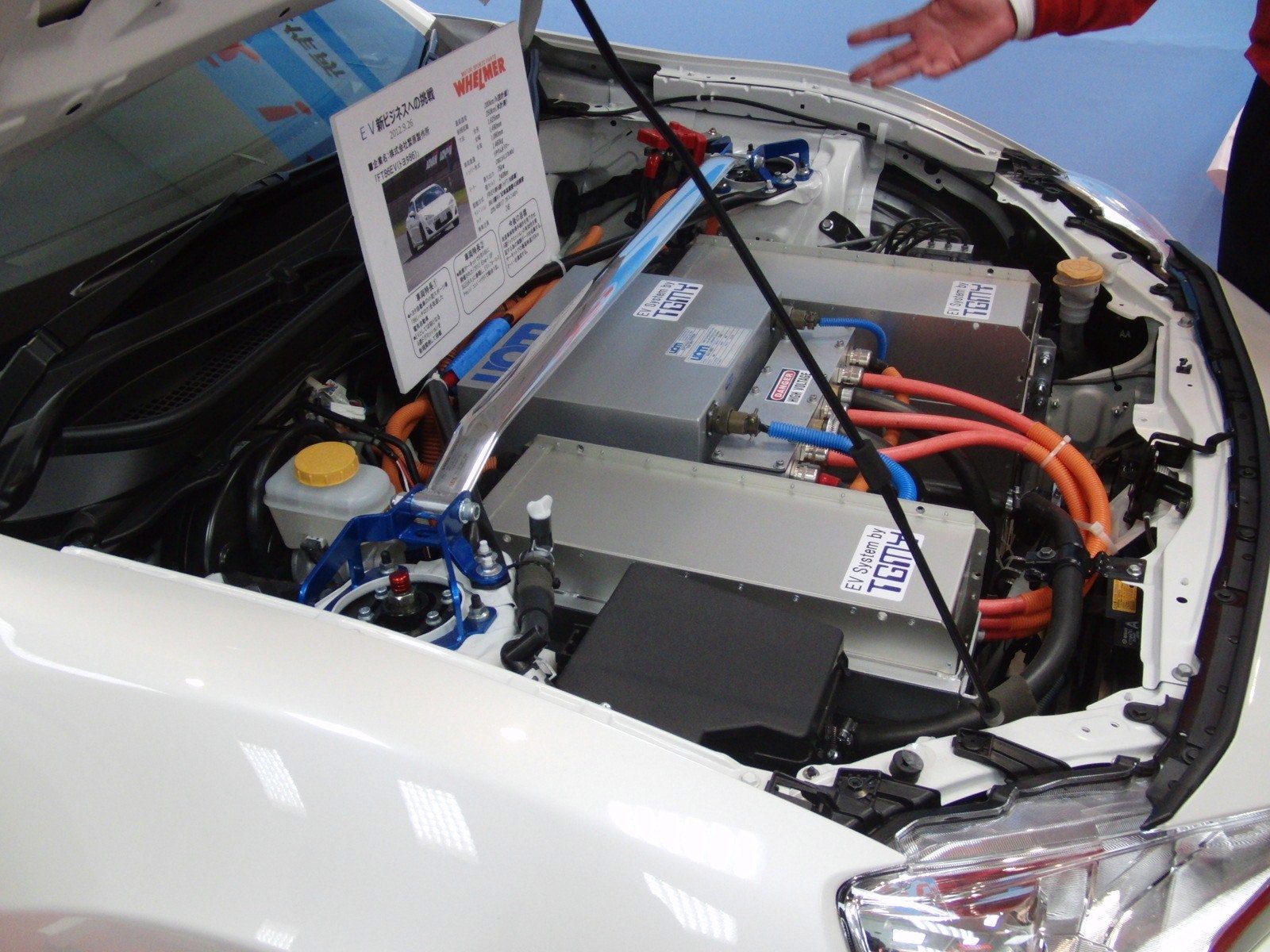
German EV battery investment to protect against Asian dominance
- In a bit to contest the growing dominance of Asian EV battery makers, Germany has earmarked €1bn to support a consortium investigating electric car battery cell manufacture with plans to fund a research facility to develop next-generation solid-state batteries. The measures are designed to reduce the dependence of German carmakers on Asian battery suppliers, while protecting German jobs at risk from the shift away from combustion engines.
- Berlin's push to shape industrial policy marks a break with its generally "hands off" approach to business decisions and is part of European efforts to forge battery alliances to counter the dominance of Chinese, Japanese and Korean firms.
- Some analysts are calling the move too little to late as Asian market leaders are ramping up output with significant risks a glut could hinder the establishment of large-scale battery cell production by European newcomers. Boston Consulting Group, for example, has estimated global battery cell production capacity will exceed demand by about 40% in 2021, exerting massive pressure on prices and making it hard for new entrants to make money.
- "We have a concentration of risk in the automobile sector. The industry is too dependent on the combustion engine," according to Deputy Economy Minister Christian Hirte. "The government therefore wants to help the sector in its efforts to diversify."
- Companies involved in talks with Economy Minister Peter Altmaier about building a factory include German battery maker VARTA Microbattery, chemical giant BASF and Ford's German subsidiary Ford-Werke GmbH. Germany manufacturers will have to compete with South Korea’s LG Chem who already have established supply chains with EV batteries made in Poland, while Samsung SDI Co and SK Innovation are planning factories in Hungary.
- Further, while the announcement by the world's biggest EV battery maker – China's Contemporary Amperex Technology Ltd (CATL) – that it would build its first European plant in eastern Germany and has struck a deal with German carmaker BMW has been welcomed by the government, it remains important for Germany to develop its own battery cell capacity.
- Recognising the importance of a homegrown battery industry for jobs and profits, the European Commission launched its own European Battery Alliance in 2017, but Sweden's Northvolt is seen as the only serious contender to emerge so far.
- The billion euros for establishing a German battery cell consortium would help establish a first factory, probably in western Germany. Berlin’s support is said to encourage a second plant, possibly in the Lausitz region near the German-Polish border where two of the regional elections in 2019 will take place, according to sources.
- The nation appears to be focusing on next-generation battery innovations, with the government wanting to spend up to €500m to co-finance a research factory to help put Germany companies ahead of the curve when solid-state batteries are ready for the mass market. Liquid electrolyte lithium-ion batteries are likely to be overtaken in a matter of years by solid-state technology that is expected to produce cheaper batteries with higher energy density and safety records.
- Companies involved in the network, known as FestBatt, include Varta, BASF, Volkswagen, BMW, car parts maker Continental, conglomerate Thyssenkrupp, carbon fibre specialist SGL Carbon, Belgian materials firm Umicore, Coperion and Heraeus.
- Electric mobility researcher at Fraunhofer highlights the need to develop additional domestic battery capacity. “If automakers boost their electric car production to 10-20% of total sales in coming years, Europe will need battery cell factories with more than 100 gigawatt hours”, well above the capacity planned by Asian producers so far.
- The majority of battery raw materials are directed through Asian markets. In an effort to establish Europe as a dominant player in the battery space, there needs to be consistent investment across the whole supply chain to ensure growth in capacity remains unhindered.
Indian government to allow individuals to set up electric vehicle charging stations without licence
- Seven months after the power ministry announced that charging stations for electric vehicles won't require licences under the provision of the Electricity Act 2003, the government is looking to give a further boost to e-vehicles by opening up the playing field to individuals.
- "Setting up public charging stations shall be de-licensed and any individual is free [to set them up], provided the stations meet the standards of the power ministry," a senior government official told The Economic Times.
- Although the government has not set any qualification criteria for opening public charging stations, the latter will be monitored and must meet specifications and performance criteria set by the ministry.
- The state electricity regulatory commissions will fix tariffs for electricity supply from distribution companies to the charging stations at a ceiling of 15% over the average cost of supply. The tariff charged by charging stations from EV owners will reportedly also be capped by the state government.
|
Dow Jones Industrials |
-0.77% |
at |
25,989 | |
|
Nikkei 225 |
+0.09% |
at |
22,270 | |
|
HK Hang Seng |
+0.07% |
at |
25,620 | |
|
Shanghai Composite |
+1.22% |
at |
2,631 | |
|
FTSE 350 Mining |
-3.63% |
at |
17,092 | |
|
AIM Basic Resources |
-0.51% |
at |
2,161 |
Economics
US – Markets are closed on Monday as the nation celebrates Veteran’s Day.
- The US$ index continues to grow stronger this morning with higher Friday US producer inflation numbers supporting the case for further monetary policy tightening.
- Latest Fed dots plot points to one more hike in December followed by three more in 2019.
- PPI (%mom/yoy): 0.6/2.9 v 0.2/2.6 in September and 0.2/2.5 forecast.
- Core PPI (%mom/yoy): 0.5/2.6 v 0.2/2.5 in September and 0.2/2.3 forecast.
China – Alibaba sets new Singles Date record sales with more than $30.8bn sold in 24 hours, up 27% on the previous year.
- While this marks a slowdown on the 39% growth recorded last year, the pace recorded is remarkably strong.
- Online retail sales grew more than 25% in the first three quarters of the year, according to a report by the National Commercial Information Centre.
- October retail sales are due this Wednesday with estimates for the measure to remain unchanged sub 10% growth rate, down on >10% recorded through most of 2017.
UK – The pound is down against the US$ this morning on reports that the EU had rejected the latest May proposal for an independent mechanism to oversee Britain’s departure from any temporary customs arrangements it agrees.
- Additionally, four British pro-EU British ministers were on the verge of quitting the government over Brexit, the Sunday Times reported.
- The pound is down 0.9% this morning trading at 1.2853.
Italy – The government has been given time until Tuesday to present a new budget before potential disciplinary steps against Rome to be taken this month.
- Local tabloids are reporting Economy Minister Giovanni Tria is looking at lowering GDP growth forecasts as well as implementing an automatic mechanism which would cut cut public expenses to keep the deficit below the 3% threshold.
- If correct, that would mark an offer of a compromise as previously Tria referred to EC demand to cut budget deficit forecasts as suicidal for Italy’s economy.
- Latest Rome economic growth forecasts stood at 1.5% for 2019 which compare to 1.2% estimated by the EC.
- Italy’s equity index is down 0.4%, broadly in line with pan-European index, with 10y bond yields trading slightly higher at 3.41% this morning.
Currencies
US$1.1254/eur vs 1.1344/eur last week Yen 114.12/$ vs 113.82/$ SAr 14.408/$ vs 14.236/$ $1.286/gbp vs $1.302/gbp 0.720/aud vs 0.725/aud CNY 6.969/$ vs 6.946/$
Commodity News
Precious metals:
Gold US$1,205/oz vs US$1,224/oz yesterday
- Gold tracks near its monthly low as investors await data on inflation later this week, signaling that the Federal Reserve has a case for raising interest rates further.
- A Labor Department report on Friday showed producer prices in the U.S. rose the most since 2012 on broad gains in costs for goods and services. Analysts are forecasting a rebound in consumer inflation in October after easing in September. At its meeting last week, the Fed left rates unchanged and stayed on course to hike in December, while signaling that “further gradual increases” in rates are coming for the “strong” U.S. economy.
- Meanwhile, ETF investors and hedge funds are showing no signs of abandoning the precious metal, even as gold retraces October’s rally. Holdings in in exchange-traded funds backed by gold have risen for five straight weeks, the longest stretch in more than a year. Bullion price have slipped for two straight weeks after posting their first monthly gain since March.
- Finally, money managers are showing they’re reluctant to bet against gold. Hedge funds and other large speculators cut their short position in bullion futures and options for a fourth straight week, the longest streak since mid-June, according to U.S. government data on Friday.
Gold ETFs 68.5moz vs US$68.5moz yesterday
Platinum US$850/oz vs US$873/oz yesterday
Palladium US$1,108/oz vs US$1,135/oz yesterday
Silver US$14.15/oz vs US$14.44/oz yesterday
Base metals:
Copper US$ 6,058/t vs US$6,143/t yesterday
Aluminium US$ 1,957/t vs US$1,994/t yesterday
Nickel US$ 11,340/t vs US$11,785/t yesterday
- Nickel on both the London and shanghai metal exchanges tumbled to the lowest level in 11 months as rebar steel prices fall on concerns over slowing demand across top consumer China, while stockpile continue to climb. Three-month nickel continued to drop below its lowest price since mid-December in London, while the most-traded Shanghai nickel contact lost -2.3% to 94,760yuan/t ($13,623.8).
- “Stainless steel prices dropped a lot in the last two weeks because production is too high”, according to Peter Peng of CRU Group, “I don’t think its just a nickel issue, its everything. Investors are quite bearish about the futures market”.
- Shanghai rebar steel prices topples nearly 4% to their lowest level since late July in early trading today, pressured by worries over slowing demand in top consumer China over the seasonally weak winter period.
- A strong US dollar and concerns over economic growth in China, triggered by US-China trade tensions, are also weighing on industrial metals. The dollar built on last week's gains and rose towards a 16-month high on Monday as traders expect the U.S. Federal Reserve to keep tightening monetary policy.
- Nickel also slumped as stockpiles rebounded from the lowest level since 2015. The surge in SHFE stockpiles, the biggest since January, has “greatly suppressed” prices. The global nickel market isn’t as tight as it looks, according to analysts at Citigroup. They’re forecasting a worldwide shortfall of about 19,000t this year while the global market will be balanced in 2019.
- Losses only cement the year-to-date performance, with the metal having fallen ~27% from its June high amid trade war concerns and fears new plants using High Pressure Acid Leach (HPAL) technology will boost supply. “Overall, while we see clear downside risk to our nickel price forecast given the advancement in the HPAL technology, we think it is still early to price the viability and scalability of these new projects and maintain our current forecasts”, adds Goldman Sachs Group Inc. analysts.
Zinc US$ 2,488/t vs US$2,499/t yesterday
Lead US$ 1,957/t vs US$2,001/t yesterday
Tin US$ 19,300/t vs US$19,290/t yesterday
Energy:
Oil US$71.7/bbl vs US$71.8/bbl yesterday - Oil jumps as Saudi Arabia opens door to production cut
- Oil jumped more than 2% on Monday after Saudi Arabia opened the door to cutting crude production despite Russia saying that an excess of supply is short term
- Khalid al Fali said this morning that market analysis conducted by producer nations showed that a 1m bpd output cut may be necessary from October levels.
- The comment followed remarks on Sunday by Mr Falih who said that state energy giant Saudi Aramco would supply 500,000 fewer barrels a day in December compared with November because of lower demand.
Natural Gas US$3.799/mmbtu vs US$3.800/mmbtu yesterday - Britain ‘at risk of blackouts without more gas storage’
- Britain needs more gas storage sites to reduce the risk of a supply shortage that could lead to blackouts, it has been reported.
- The country’s gas supply position is “precarious” and winter shortfalls could jeopardise fuel supplies for power stations
- The government has been accused of “taking its eye off the ball” after the closure of Britain’s main storage site and urged it to act to “get some more gas storage in place”.
Uranium US$29.10/lb vs US$29.10/lb yesterday
Bulk:
Iron ore 62% Fe spot (cfr Tianjin) US$73.2/t vs US$73.2/t
Chinese steel rebar 25mm US$677.6/t vs US$680.9/t
Thermal coal (1st year forward cif ARA) US$89.6/t vs US$89.6/t
Coking coal futures Dalian Exchange US$198.0/t vs US$199.0/t
Other:
Cobalt LME 3m US$51,000/t vs US$55,000/t
China NdPr Rare Earth Oxide US$45,347/t vs US$45,569/t
China Lithium carbonate 99% US$10,045/t vs US$10,094/t
- Lithium demand still appears to be growing as Australian lithium producer Altura Mining reports signing a deal to supply Chinese battery giant Ganfeng lithium with concentrate from its Pilgangoora mine in Western Australia. The agreement will see Altura supply with 8,000t 6%-spodumene concentrate this year, with a minimum of 70,000tpa from 2019 to 2021.
- The deal comes amid falling prices for the raw material and after one of Altura's other two customers, Shaanxi J&R Optimum Energy Co. Ltd (JRO), was forced into restructuring mid-year. The Asian battery maker was badly hit by China’s change to subsidies for electric vehicles, with the decision forcing Shaanxi to half its minimum contracted supply to 50,000tpa from 2019.
- Interest in Australian spodumene production is more evident as Pilbara Minerals Ltd. receive approval to lift production capacity above 800ktpa with expansion at Pilgangoora. The approval arrives “against a backdrop of significant demand growth for lithium raw materials over the coming decade”, according to CEO Ken Brinsden.
Tungsten APT European US$275-295/mtu vs US$275-295/mtu
Battery New
New battery material from Johnson Matthey
- Johnson Matthey has developed a new type of cathode material called eLNOTM for use in electric vehicle lithium-ion batteries.
- It has been developed with a view to enabling long-range driving between charges – up to 300-400 miles.
- eLNO reportedly also has excellent power characteristics which means that a battery containing eLNO will enable faster acceleration for an EV than a standard car, and the recharging times can be quicker.
California Moves to Replace Gas Plants With Batteries From Tesla
- PG&E Corp. plans to replace three natural gas-fired power plants in California with battery-storage systems as the state continues its push to move away from use of fossil fuels.
- The California Public Utilities Commission has approved four PG&E energy-storage contracts to support Northern California’s electric grid, including a project by Tesla Inc.
- The move follows legislation signed by Governor Jerry Brown in September requiring the state to get all of its power from carbon-free sources by 2045.
Company News
Amur Minerals* (AMC LN) 3.4p, Mkt Cap £22.9m – PFS due in Q1/19
- The Pre-Feasibility Study completion date has been postponed for Q1/19.
- Longer than initially forecast preparation period of the report is attributed to a number of considerations from a series of potential strategic partners included in the study.
- “The Company believes that the additional time taken to address these points has greatly enhanced the quality ofd the FS content and allowed for a document that more readily meets the expectations of as wide an audience as possible,” the Company commented on the news.
- Additionally, the team reported that a strategic plan for 2019/20 is due to be announced shortly.
*SP Angel act as Nomad and Broker to Amur Minerals
Ariana Resources (AAU LN) 1.375p, Mkt Cap £14.6m –Q3 operations report for Kiziltepe
(Ariana hold 50% of the Kiziltepe gold mine in jv with Proccea Construction Co.)
- Ariana Resources reports Q3 2018 production to the end of September of 7,588oz of gold from the processing of 49,272 tonnes of ore at an average grade of 4.94g/t gold at its 50% owned Kiziiltepe gold mine in Turkey.
- Gold production increased by 6% during the quarter bringing the total for the year to date to 19,625oz while silver output rose to bring the total for the first nine months of the year to 150,718oz.
- The company estimates that operating cash costs for the quarter were US$330/oz reflecting the positive influences of the 28% decline in the value of the Turkish Lira and “a substantial increase in by-product silver credit (+36%) and maintenance of high grades through the plant during the period.”
- Precious metals sales generated revenue of $10.1m during the quarter.
- Ariana also reports that “As at the end of the quarter, 40% of the JV construction capital loan of US$33 million has been repaid, with the remaining balance to be repaid between now and April 2020”.
- Commenting on the results, Managing Director, Kerim Sener, said “These quarterly results have yet again demonstrated record performance for the Kiziltepe Mine and we are now well on track to exceed our production guidance for the year. Since start-up in 2017 the JV has produced about 30,000 ounces of gold and over 200,000 ounces of silver”.
Conclusion: High gold grades, and increasing silver by-product revenue, aided by a sharp fall in the Turkish Lira contribute to the low US4330/oz cash costs at Kiziltepe.
Sent: 09 November 2018 09:01
Bushveld Minerals* (BMN LN) 39.25p, mkt cap £431m – Lack of Vanadium Supply Threatens Global Construction
BUY - Target Price raised to 87 p (from 37p)
(Bushveld Minerals now hold 74% of Vametco and 84% of Bushveld Energy it’s vanadium redox battery unit)
SEE LINK FOR BUSHVELD MINERALS PDF NOTE
- Vanadium: we have been looking further into vanadium supply and demand where we see increasing probability for significant supply shortages.
- The supply situation looks so serious to us that we cannot see where the market will source sufficient vanadium to meet demand for strengthened steel in the global construction sector.
- The steady rise in ferro-vanadium prices in China and Europe highlights a severe shortage of available material indicating a lack of available stock the development of a significant market deficit.
- The few primary producers in the market appear wholly incapable of expanding to meet demand in the next two years with so much by-product, slag, production removed from the market.
- We highlight the reasons for this in the attached note, see link above.
- Our ferro-vanadium price assumptions rise to US$75/kgV for 2018, 2019 and 2020 and to US$55/kgV for 2021 and US$45/kgV for 2022 and thereon.
- We cannot see how the market can supply demand for vanadium in the next two years and we feel vanadium prices should settle at a higher price level than previously envisaged in the short and longer term.
- Q3 results: Bushveld Minerals third quarter report highlights the impact of the 16-days unofficial stoppage at the Vametco vanadium plant and seven-days of unplanned maintenance.
- The result is that Vametco’s Q3 ferro-vanadium production was some 14.6% lower than the previous quarter at 537mtV vs 629mtV.
- Sales: Vametco sold 1,987mtV of vanadium into the market in Q3 down 18% on Q2 and 21.5% lower yoy.
- Management have revised Nitrovan (ferro-vanadium) production lower to 2,600-2650mtV for the year due to the stoppage and unplanned maintenance.
- Phase 2 completed in June sees Vametco’s capacity at 3,750mtV
. - Phase 3: as part of the operational improvement initiative, designed to enhance Vametco’s productivity, the Company is reviewing the timing and required investment to expand production capacity to 5,000 mtV.
- Production costs rose 11% unsurprisingly in the quarter to ZAR298/kgV (US$21/kgV) vs Q2 with unit costs guidance revised to ZAR250/kgV and ZAR255/kgV for the year.
- We expect unit production costs to fall significantly from here as throughput rises and grades recover assuming no further unplanned stoppages.
- Some slippage in production has also been seen as a result of grade control in the Vametco mine and the team completed 13 drill holes to increase geological confidence with the aim to improve grade control in the plant feed. Vametco will publish an updated mineral resource estimated in the new year.
- Bushveld bought a further 16% of Vametco through the purchase of Sojitz’s stake taking Bushveld’s stake to 74% in the quarter. The deal now means that Bushveld have acquired 74% of Vametco for US$48m, a remarkable feat given the company had relatively little spare cash when it agreed to buy its initial 23% stake in Vametco for $4.7m.
- Tailings: Vametco is expanding its tailings facility to maintain capacity. Our modelling includes expenditure for tailings work
- Off-gas: project work required to meet stricter regulations and increase kiln output.
- Brits Vanadium Project: Results from 26 drill holes are shown in the report with the simple average of the grades presented is 1.55% in 43.4% magnetite.
- Valuation: Our valuation for Bushveld Minerals rises to US$1.6bn assuming an 8% discount rate and a long term exchange rate of ZAR14/USD or 87 pence per share on our new vanadium price assumptions.
- We have yet to add value for Bushveld Energy which is 84% owned by the group and is working to deploy vanadium redox flow batteries in grid as well as industrial applications in South Africa. The company is also working with the Industrial Development Corporation of South Africa to build an electrolyte manufacturing plant in South Africa, to be located at Vametco and the East London Industrial Zone.
- There 63 VRFB projects globally with 77% under construction and 17% operational highlighting strong growth in grid battery capacity.
Conclusion: Our research into the supply / demand for vanadium leads us to raise our forecasts for vanadium prices and therefore for Bushveld Minerals.
We reckon the market will see through the expected slippage in the Q3 numbers due to the overriding impact of the vanadium price.
We expect Vametco to report a better final quarter and to continue to grow into the new year.
|
Vametco plant assuming 100% ownership |
2017 |
2018 |
2019 |
2020 |
2021 |
2022 |
2023 |
| ||
|
Price V2O5 |
$/lb |
6.4 |
20.2 |
17.7 |
17.7 |
12.8 |
10.33 |
10.33 |
| |
|
Ferro Vanadium |
US$/kg |
32.6 |
85.0 |
75.0 |
75.0 |
55.0 |
45.00 |
45.00 |
| |
|
Vanadium sales |
kg |
2721 |
2600 |
3750 |
4370 |
5000 |
7,500 |
10,000 |
| |
|
Sales |
US$m |
82.0 |
204.2 |
259.9 |
302.8 |
254.1 |
311.85 |
415.80 |
| |
|
Operating costs |
US$m |
58.2 |
95.2 |
86.5 |
102.0 |
107.7 |
150.30 |
196.65 |
| |
|
Operating costs |
US$/kg |
21.4 |
36.6 |
23.1 |
23.3 |
21.5 |
20.04 |
19.66 |
| |
|
Operating profit |
US$m |
23.7 |
109.0 |
173.3 |
200.8 |
146.4 |
161.55 |
219.15 |
| |
|
Pre-tax profit |
US$m |
23.5 |
108.0 |
172.0 |
198.8 |
140.5 |
151.97 |
209.49 |
| |
|
tax |
US$m |
6.7 |
30.8 |
49.0 |
56.7 |
40.0 |
43.31 |
59.71 |
| |
|
Post-tax profit |
US$m |
16.8 |
77.2 |
122.9 |
142.1 |
100.5 |
108.66 |
149.79 |
| |
|
EPS |
US$c/s |
1.5 |
7.0 |
11.1 |
12.8 |
9.1 |
9.790 |
13.496 |
| |
|
PE |
x |
25.2 |
5.5 |
3.4 |
3.0 |
4.2 |
3.9 |
2.82 |
| |
|
EV/EBITDA |
x |
17.8 |
3.9 |
2.4 |
2.1 |
2.9 |
2.6 |
1.9 |
| |
|
EBITDA |
US$m |
- |
23.74 |
108.99 |
173.35 |
200.83 |
146.43 |
161.55 |
219.15 |
|
|
Free Cash Flow |
US$m |
- |
23.49 |
95.19 |
163.70 |
187.61 |
83.22 |
98.33 |
205.94 |
|
|
Attributable Cash Flow |
US$m |
74.00% |
17.38 |
70.44 |
121.14 |
138.83 |
61.58 |
72.77 |
152.39 |
|
SP Angel forecasts: Figures based on 100% of Vametco plant. Bushveld now hold an effective 64% of the Vametco plant
*An SP Angel mining analyst and nomad have visited the Vametco in South Africa.
*SP Angel act as Nomad and broker to Bushveld Minerals.
Horizonte Minerals (HZM LN) 2.34 pence, Mkt Cap £33.5m – Quarterly results and Araguaia feasibility study
- Horizonte Minerals has reported an operating loss of £0.8m for the three months ending 30th September bringing the loss for the first nine months of 2018 to £2.1m (first nine months of 2017 – loss of £1.2m.)
- The company, which recently reported the results of its feasibility study to develop the Araguaia ferro-nickel project in Brazil, reports a 30th September cash balance of £7.9m.
- Cash outflow from operations during the nine months to the end of September of £1.4m and investment of £2.0m were offset by £1.8m raised from the issue of shares leading to an overall decline of cash amounting to £1.6m during the year so far.
- The feasibility study envisages the investment of US$433m to develop Araguaia to process 900,000tpa of nickel laterite ore over a 28 years period and produce an average of 14,500tpa of nickel contained in 52,000tpa of ferronickel product.
- At a nickel price of US$14,000/tonne the feasibility study estimated that the project would generate an after tax NPV8% of US$401m and an IRR of 20.1%.
Conclusion: Now that the feasibility study for Araguaia is completed, we expect that Horizonte Minerals’ emphasis will shift to securing project funding to develop the US$443m ferronickel project. We look forward to further news.
Jangada Mines (JAN LN) 2.425 pence, Mkt Cap £5.7m – Optimisation delivers 32% reduction in capex estimate
- Jangada Mines report that optimisation of the proposed flowsheet for their Pedro Blanca platinum group metals deposit in northern Brazil, has resulted in a 32% reduction in projected capital development costs to US$43.9m from the previously estimated US$64.9m.
- Over 95% of the US$21m saving comes from a lower estimate of the cost of the plant, which is now estimated to cost 38% less than originally estimated at US$33.8m.
- Estimates are currently prepared “to a preliminary economic assessment level of accuracy” and it appears that the revised flowsheet and reduced capex estimates come from a simplification of the plant which now offers a “simpler and more efficient process route”.
- Simplification not only reduces the capital expenditure but the company anticipates that “this will reflect in reduced operating cost metrics that will feed into the ongoing BFS.”
- There do not appear to be published estimates of the likely NPV and IRR of the project prior to the identification of the cost savings but a capital cost reduction of this magnitude, perhaps associated with lower operating costs is likely to be worthwhile.
Conclusion: Simplification of the proposed flowsheet has generated a 32% reduction in the capital cost estimate to develop Jangada and may also offer lower operating costs. We look forward to further information on the economic impact of these cost savings when the findings of the BFS, which is currently underway, are released.
Analysts
John Meyer – 0203 470 0490
Simon Beardsmore – 0203 470 0484
Sergey Raevskiy – 0203 470 0474
Phil Smith (Technology) – 0203 470 0475
Zac Phillips (Oil & Gas) – 0203 470 0481
Sales
Richard Parlons – 0203 470 0472
Jonathan Williams – 0203 470 0471
SP Angel
Prince Frederick House
35-39 Maddox Street London
W1S 2PP
*SP Angel are the No1 integrated nomad and broker by number of mining brokerage clients on AIM according to the AIM Advisers Ranking Guide (joint brokerships excluded)
+SP Angel employees may have previously held, or currently hold, shares in the companies mentioned in this note.
DISCLAIMER
This note has been issued by SP Angel Corporate Finance LLP (“SP Angel”) in order to promote its investment services.
This information is a marketing communication for the purpose of the European Markets in Financial Instruments Directive (MiFID) and FCA’s Rules. It has not been prepared in accordance with the legal requirements designed to promote the independence or objectivity of investment research.
This document is not based upon detailed analysis by SP Angel of any market; issuer or security named herein and does not constitute a formal research recommendation, either expressly or otherwise.
The value of investments contained herein may go up or down. Where investment is made in currencies other than the base currency of the investment, movements in exchange rates will have an effect on the value, either favourable or unfavourable. Securities issued in emerging markets are typically subject to greater volatility and risk of loss.
This note is confidential and is being supplied to you solely for your information and may not be reproduced, redistributed or passed on, directly or indirectly, to any other person or published in whole or in part, for any purpose.
Neither the information nor the opinions expressed herein constitutes, or is to be construed as, an offer or invitation or other solicitation or recommendation to buy or sell investments. This information is for the sole use of Eligible Counterparties and Professional Customers only and is not intended for Retail Clients, as defined by the rules of the Financial Conduct Authority (“FCA”) and subject to SP Angel’s Terms of Business as published or communicated to clients from time to time.
It is not investment advice and does not take into account the investment objectives and policies, financial position or portfolio composition of any recipient. This document should not to be relied upon as authoritative or taken in substitution for the exercise of you own commercial judgment. SP Angel is not responsible for any errors, omissions or for the results obtained from the use of the information in this document.
This document has been prepared on the basis of economic data, trading patterns, actual market news and events, and is only valid on the date of publication. SP Angel does not make any guarantee, representation or warranty, (either expressly or implied), as to the factual accuracy, completeness, or sufficiency of information contained herein. This document has been prepared by the author based upon information sources believed to be reliable and prepared in good faith.
SP Angel, its partners, officers and or employees may own or have positions in any investment(s) mentioned herein or related thereto and may, from time to time add to, or dispose of, any such investment(s).
SP Angel Corporate Finance LLP is a company registered in England and Wales with company number OC317049 and whose registered office address is Prince Frederick House, 35-39 Maddox Street, London W1S 2PP. SP Angel Corporate Finance LLP is authorised and regulated by the Financial Conduct Authority whose address is 25, The North Colonnade, Canary Wharf, London E14 5HS and is a Member of the London Stock Exchange plc.