
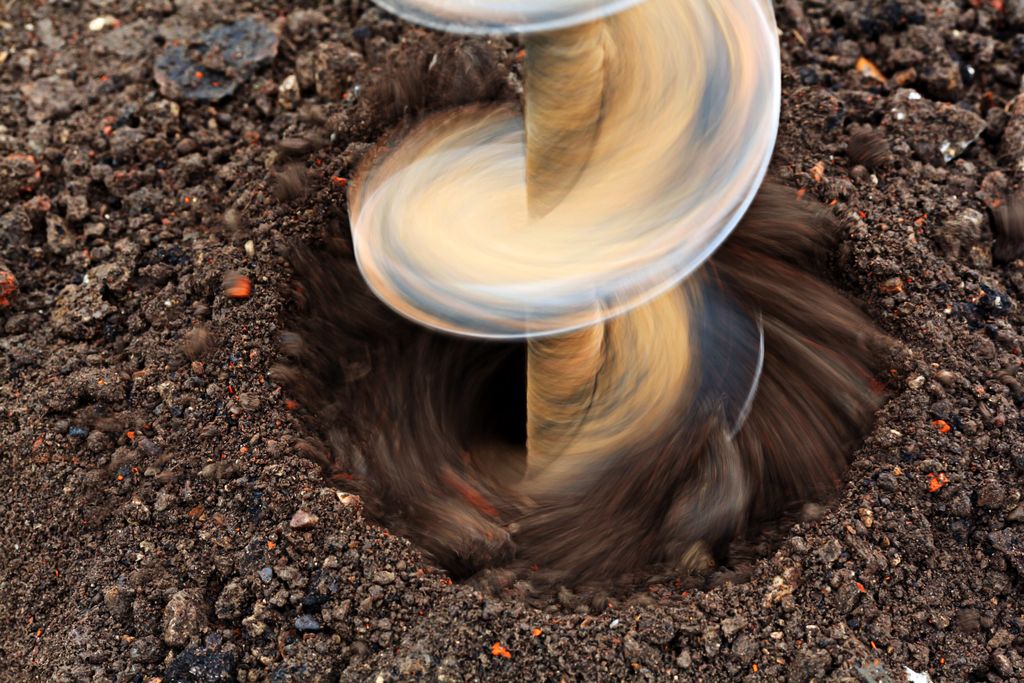
Altona Rare Earths (ANR) announced that it has successfully completed its 2021 drilling programme at its Mozambique Monte Muambe Project, both on time and within budget.
Monte Muambe is an ancient sub-volcanic carbonatite intrusion with a 4km diameter. It was explored between 2010 and 2012, where significant Rare Earth Element (“REE”) intercepts showed grades up to 4.1% Total Rare Earths Oxide ("TREO") quite close to the surface.
In October 2021, Altona commenced exploration drilling at its Monte Muambe Project in Northwest Mozambique, in the Tete Province, to evaluate the asset’s value and potential.
The Phase 1 drilling, which entails drilling 39 holes for a total meterage of 3,000 metres, across six carefully selected rare earths targets, is being divided into two parts; a diamond drilling part focused on 4 holes and a reverse circulation drilling part focused on 35 holes.
The African-focused rare earths company undertook the first phase of the programme to provide an initial guide as to the extent of Rare Earth Elements deposits across the site.
The programme at Monte Muambe included testing the lateral extension of known REE mineralisation in the crater as well as exploring four new targets where Altona’s geologist team identified possible deep carbonatite weathering, ideal for hosting REE deposits.
Altona said it is undertaking the drilling programme in order to improve the understanding of the geological model through repeating selected historic RC holes in diamond drilling as well as to check the lateral extension of REE mineralisation encountered in historic RC holes.
Another objective of drilling will be to test four new targets selected by its geologist team based on available data and with a focus on areas with potential for deep weathering of carbonatites, which is known as an enrichment factor in carbonatite-hosted REE deposits.
Currently, Altona's geologist team in Mozambique are preparing the samples for shipment to an internationally certified test lab for detailed analysis (assay) planned for early December.
Altona informed shareholders that the full results, which are expected in March 2022, will enable the Company to make informed decisions on how to further develop the project.
Christian Taylor-Wilkinson, Chief Executive Office of Altona Rare Earths, commented, "Africa is a challenging operational environment. We have assembled a highly experienced team, which is now starting to deliver as evidenced by the completed acquisition of the Monte Muambe REE project in June this year and already completing Phase 1 drilling.”
She added: “Whilst we wait for the results, our team will focus on our new Chambe REE prospect in Southern Malawi, where we are currently undertaking initial sampling and analysis, prior to the start of the rainy season, to enable us to commission a Competent Persons Report, which will assist the target identification for Phase 1 drilling in Q1 2022."
Last month, Altona announced its intention to acquire an initial 51% interest in the Chambe Rare Earths Project in Malawi, through a jv agreement with Akatswiri Mineral Resources, a tenement which covers an area of 128 km2 in the Mulanje region of Southern Malawi.
The Aquis-listed rare earths mining company explained that the Chambe project is a large, weathered ionic adsorption clay-hosted (“Ionic Clay”) Rare Earth Elements (“REE”) project which contains kaolinitic soils which could lend itself to carrying bulk REE deposits.
The Chambe project is held under exploration licence EPL 0594/20 which was granted on 9 September 2021 and valid until 6 September 2024, with an option to renew, Altona noted.
Exploration work undertaken between 2009 and 2014 confirmed the presence of mineralised Rare Earth Oxide clays, similar to many of the larger, high-value Heavy REE mines in China.
Meanwhile, analysis of samples from Chambe in 2010 showed the soils to contain from 475 to 739 ppm total REE, including the key Neodymium and Praseodymium (NdPr) metals.
Altona explained to investors that the benefits of extracting REE from shallower ionic clay deposits include lower operating and capital costs, as well as shorter times for development.
The project will be run through Akatswiri Rare Earths Ltd (“ARE”), into which the exploration licence is in the process of being transferred. The acquisition is subject to government regulatory approval as is standard when transferring the ownership of a licence, it noted.
Altona said the rapid expansion of new energy sectors has driven its decision to make a second acquisition. It said the rising, global demand for EVs and wind powered electricity is driving demand for neodymium, praseodymium and other REE “technology” metals.
Meanwhile, in recent weeks, the Company has said it continues to work with the Financial Conduct Authority to complete the listing process for its proposed LSE Standard application.
Follow News & Updates from Altona Rare Earths: