
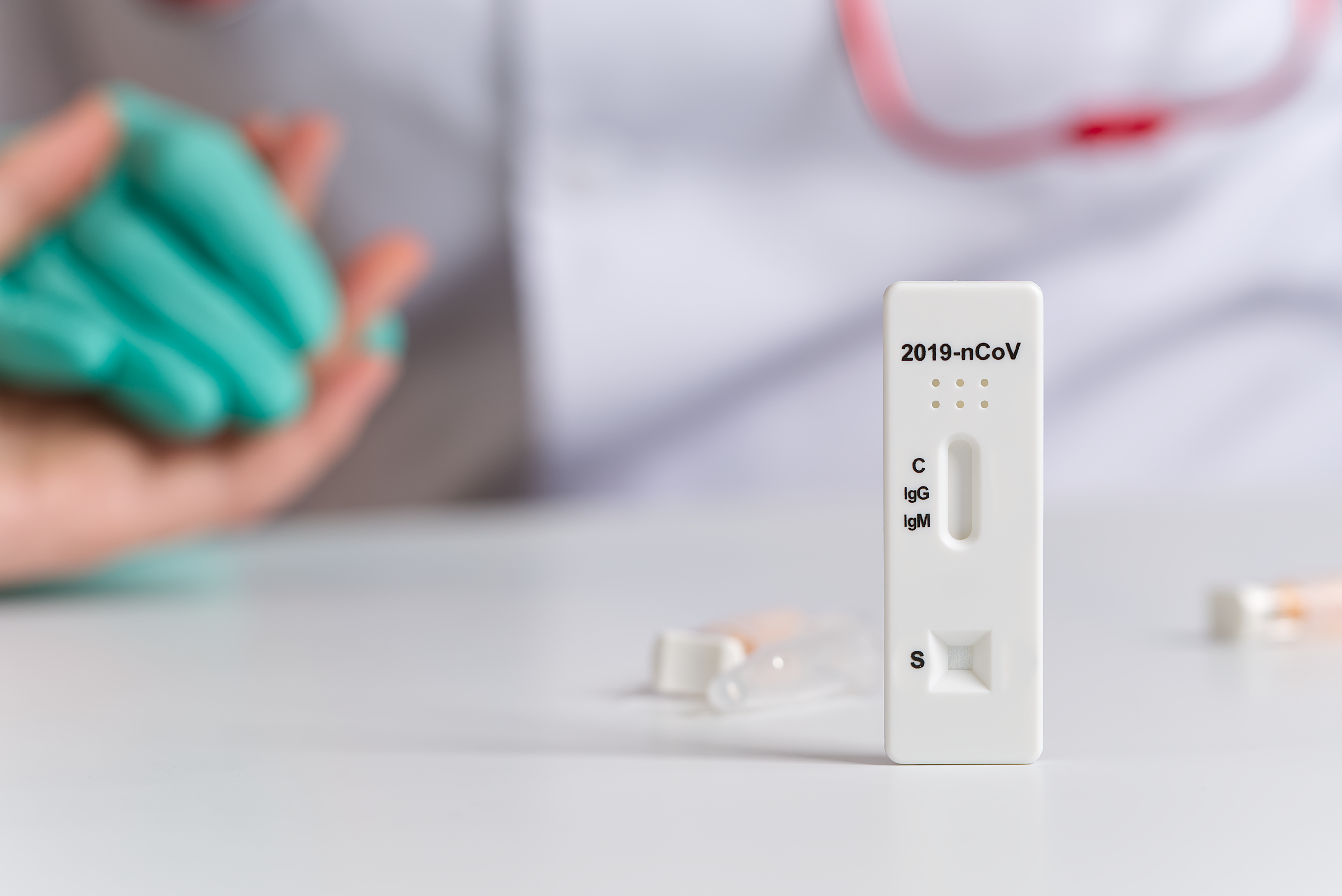
Abingdon Health (ABDX) is launching a score-card product available alongside the AbC-19™ rapid test that will help indicate the strength of antibody response and possible immunity.
The Group said the score-card, which will initially be used for research use only, will provide a semi-quantitative result to indicate the strength of antibody response and possible immunity.
The result is achieved by the use of a simple line intensity score-card which is available as an accessory to the standard Lateral Flow device ("LFD") for research applications, it explained.
The AbC-19™ LFD produces a line in the presence of IgG neutralising antibodies to the spike protein of the SARS-CoV-2 virus as are produced both after vaccination and natural infection.
The intensity of the line, which can be seen visually, is proportional to the amount of these IgG (otherwise known as Immunoglobulin G, a type of antibody) neutralising antibodies present in the finger-prick blood sample with higher levels of antibodies producing a stronger test line.
Recent studies of the score-card, including one from the University of Birmingham, have illustrated the use of the AbC-19™ LFD in semi-quantitative format and have shown the test line response to be proportional to the amount of antibodies in an international standard.
Abingdon believes that using the score-card with AbC-19™ LFD will allow scientific communities to help further understand the presence and strength of IgG neutralising antibodies following infection and/or vaccination, a key indicator of protective immune response and a tool to allow stratification of patients in need of booster vaccinations.
The Company said it is preparing the CE-marking of this scorecard accessory for the AbC-19™ LFD and ultimately, when the scientific community determines the level of antibodies which infer immunity, has the potential to add a 'cut-off' to the score-card.
Shares in Abingdon Health were trading 3.23% higher during the late morning at 48p.
Recent research from The BMJ found that immuno-compromised individuals generate lower levels of antibodies compared with healthier people following two vaccine doses, while Israeli research found that there are variations in vaccine-response between males and females.
A study published on 30 August 2021 highlighted different responses in patient cohorts when comparing the Moderna and Pfizer-BioNTech vaccines, with one study noting antibody levels start to reduce at around 2-3 months, according to new data from UCL’s Virus Watch study.
Abingdon noted that determining the presence and strength of IgG neutralising antibodies enables governments, individuals and businesses to make more informed decisions about COVID-safety measures and vaccine programme deployment to the most vulnerable.
In areas of scarce vaccine supply IgG neutralising antibody testing could be deployed to stratify the population and direct vaccine to those with no or limited immunity to COVID-19.
Noting the growing number of administrations that are utilising post-vaccine serology testing such as in Hong Kong, the Company said it believes that the addition of the Semi-Quantitative scorecard accessory will aid further deployment of on-site serology tests such as AbC-19.
Chris Yates, CEO of Abingdon Health, commented: "The launch of the semi-quantitative accessory to AbC-19™ is an important addition to the tools available to researchers as they qualify and measure the antibody level appropriate to infer protective immunity.
He added, “There is a lot of work underway internationally to set a globally recognised standard threshold and we welcome the establishment of an international standard that will help governments manage their vaccine and booster programmes. Devices such as the AbC-19™ help democratise testing and allow individuals to know their own neutralising antibody status, assess their own risk, and seek appropriate advice when indicated."
Follow News & Updates from Abingdon Health: