

Global defence spending hit $1.82 trillion in 2018, the highest level since the Cold War, according to a report by the Stockholm International Peace Research Institute.
The United Kingdom’s defence spending reached $50 billion (2% of GDP), but a recent defence committee report recommended increasing the budget to 3% of GDP, roughly $78 billion.
Japan plans to splash out $245bn over the next five years, (roughly $49 billion annually), which is an 11% rise over the past five years.
Few nations’ defence spending, however, has surged quite like China’s. Its annual defence spending amounted to $250 billion in 2018, a 5% increase from the previous year. Its defence budget has increased by roughly a third between 2013 and 2017.
NATO, as well as other world nations, will be under pressure to match these efforts. Demand for military equipment will be one the the key drivers for short term defence sector growth. So, for those in the defence business, this is good news.
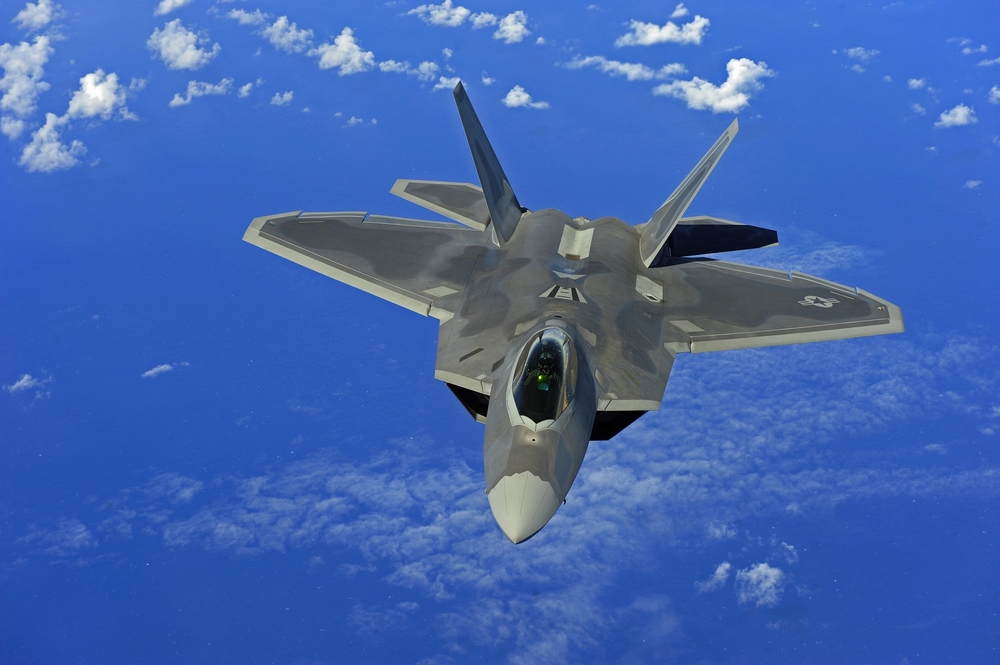
While earnings season saw Lockheed Martin boost its financial guidance for 2019, soaring past Wall Street expectations, BAE Systems delivered slightly lower revenues, citing fierce competition, and Boeing revenues took a hit after the 737 failures.
But these companies are large and diversified, deriving their revenues from a wide area of business divisions, not just military equipment.
According to a report by Deloitte, large blue chip prime contractors are expected to consider acquiring small to mid-sized companies to gain access to new technologies and markets.
The report highlighted that original equipment manufacturers will put pressure on suppliers to reduce costs and increase production rates, which, in turn, is pushing many suppliers to consolidate for scale, cost-effectiveness, and higher negotiating power.
Recent examples include Aerospace supplier United Technologies Corp paying $30 billion to buy avionics and interiors maker Rockwell Collins. Two major communications and electronics contractors, L3 and Harris, merging in a $33.5 billion deal, one of the biggest-ever mergers in the defence sector. And most recently, Bombardier, the Canadian-based aerospace and rail manufacturer, planning to sell its operations in Northern Ireland.
So while the bluechip names are poised to benefit from the defence sector growth, there are 3 AIM listed defence companies who specialise in military equipment who may be directly positioned to take a slice of the trillion dollar pie.
TP GROUP (TPG) (£47m mkt cap) is a specialist services and engineering group that designs and develops advanced technologies, equipment, systems, and support services.
It’s customers include bluechip defence contractors like BAE Systems, Baker Hughes, Rolls-Royce, Babcock, Leonardo, Qinetiq Group, and many more. It was recently reclassified from Industrial Engineering to Aerospace & Defence at the end of 2018 as the majority of its revenue and profits come from defence, intelligence and space sector clients.
COHORT (CHRT) (£150m mkt cap) is a defence technology group operating 4 different companies that apply advanced technology in the defence, security, and related markets.
It works on systems and equipment ranging from electronic warfare operation support to cyber security to signals intelligence technology. The company runs decentralised management structure and emphasizes in its annual report a focus on niche product and service offerings.
CHEMRING (CHG) (£412m mkt cap) is a technology business that designs, manufactures, supplies and supports high technology detection systems, countermeasures and energetic products and technology services.
Its customers include national defence and security agencies, and defence prime contractors across the UK, US, Australia and Norway. The company operates in markets where it has niche technology, intellectual property, expertise and high barriers to entry.
As geopolitical tensions are continuing to intensify, strong demand for military equipment is expected to continue, so savvy investors will be watching this space.
The information, investment views and recommendations in this article are provided for general information purposes only and do not constitute financial, investment or legal advice. Although based on information believed to be accurate and complete, the information is not guaranteed to be accurate or current and readers should seek advice specific to their circumstances from their adviser before making any investment decision or taking any action. Nothing in this article should be construed as a solicitation to buy or sell any financial product, or to engage in or refrain from doing so or engaging in any other transaction. Full disclosure of potential conflict of interest is made in accordance with ethical standards and the author may or may not hold investments in all or any of the companies under discussion.